
The software outsourcing market continues to demonstrate dynamic growth, confirming the importance of digital transformation for businesses. In 2025 and 2026, businesses that don't embrace digital tools risk losing their competitiveness. The outsourcing market is vast, offering a range of services, from mobile app development to offshore software development. Offshore outsourcing, in particular, is widely used by businesses of all sizes.
According to Grand View Research, the custom software development market is expected to be valued at $43.16 billion in 2025, with a compound annual growth rate (CAGR) of 22.6% through 2030, reaching $52.84 billion in 2025.
In this article, we will consider all the advantages and disadvantages of outsourcing software development that will help you decide whether it will be useful for your business.
What is software development outsourcing?
Outsourcing development involves delegating software development projects to external providers. This model is popular not only among small businesses but also among giants, including Google, Facebook, and Microsoft.
Outsourcing is also an excellent solution for many business owners who don’t have enough funds to maintain an in-house development team or do not want to extend their budget.
Outsourcing software development is your chance to get expert assistance without going through the recruitment and onboarding process and managing internal team members. Compared to in-house teams, you can hire talented developers from Eastern Europe and pay only for their working hours.
The key is to find well-qualified and experienced specialists in a software development company, your outsourcing partner, who can meet all the needs of your development project.
Hiring Remote IT Specialists: Market Situation
Let's talk about the drawbacks of outsourcing, specifically the situation in the job market. Korn Ferry analysts forecast that there will be over 85 million unfilled positions worldwide due to a lack of qualified talent by 2030.
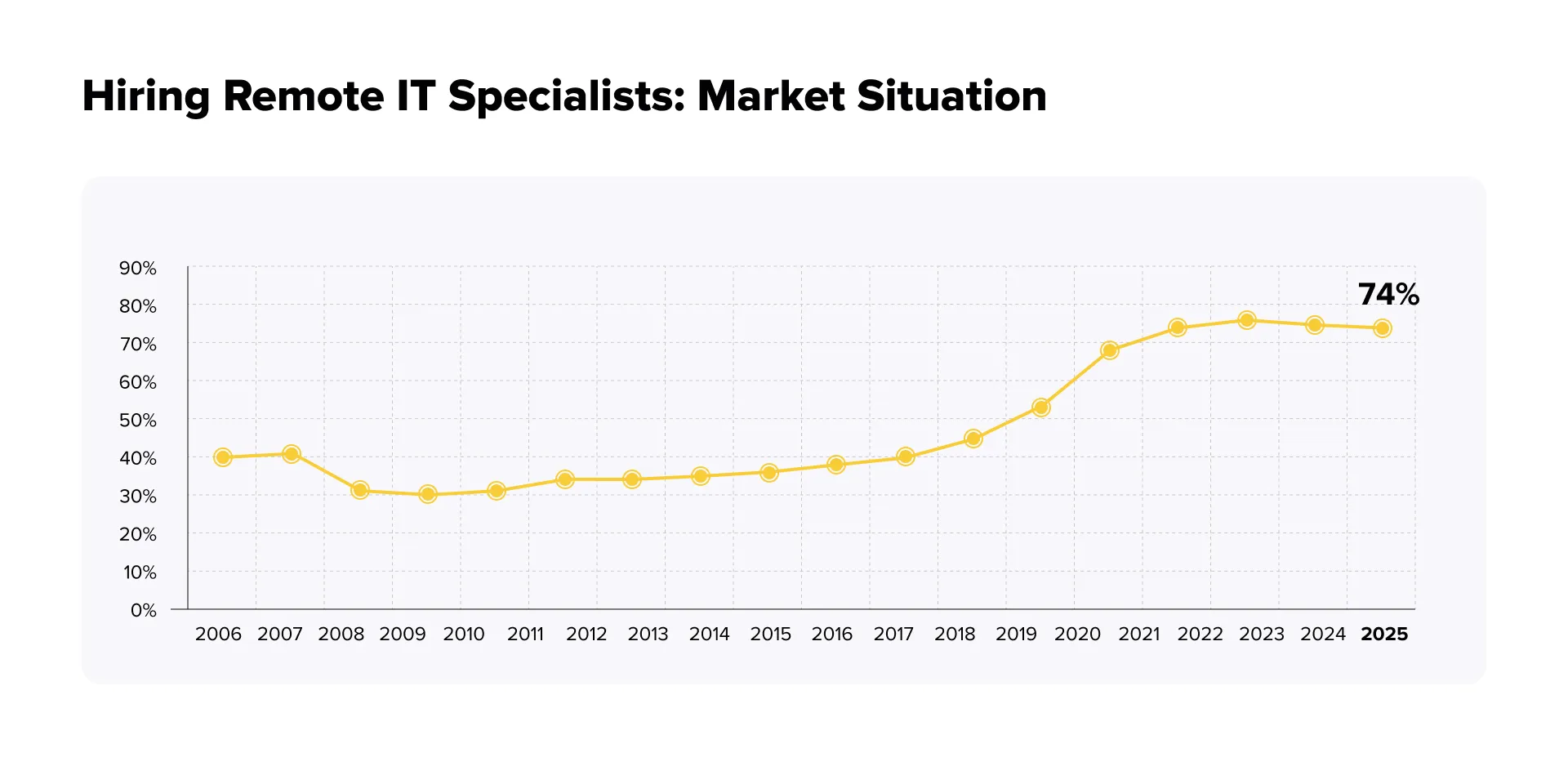
According to ManpowerGroup’s 2025 Global Talent Shortage Survey, 74% of employers globally report difficulty recruiting the skilled talent they need. It highlights that among the hardest-to-fill sectors is Information Technology, with a shortage level of about 76% in that vertical.
The 2025 IT World of Work – Insights and Outlook report emphasises that emerging roles in AI, cybersecurity, data science, and cloud architecture are among the most affected by talent shortages.
This shortage refers specifically to in-house software developers and development teams whose experts are simply absent from the job market. However, we understand where to find the masters of these scarce professions. For example, at outsourcing firms like Lampa Software, which serves as a service provider for business owners by conducting application development for them. You can order mobile app development at Lampa.dev.
Next, let's delve deeper into assessing the situation and understanding the advantages and disadvantages of outsourcing for e-commerce and other business sectors.
Pros of Outsourcing Software Development
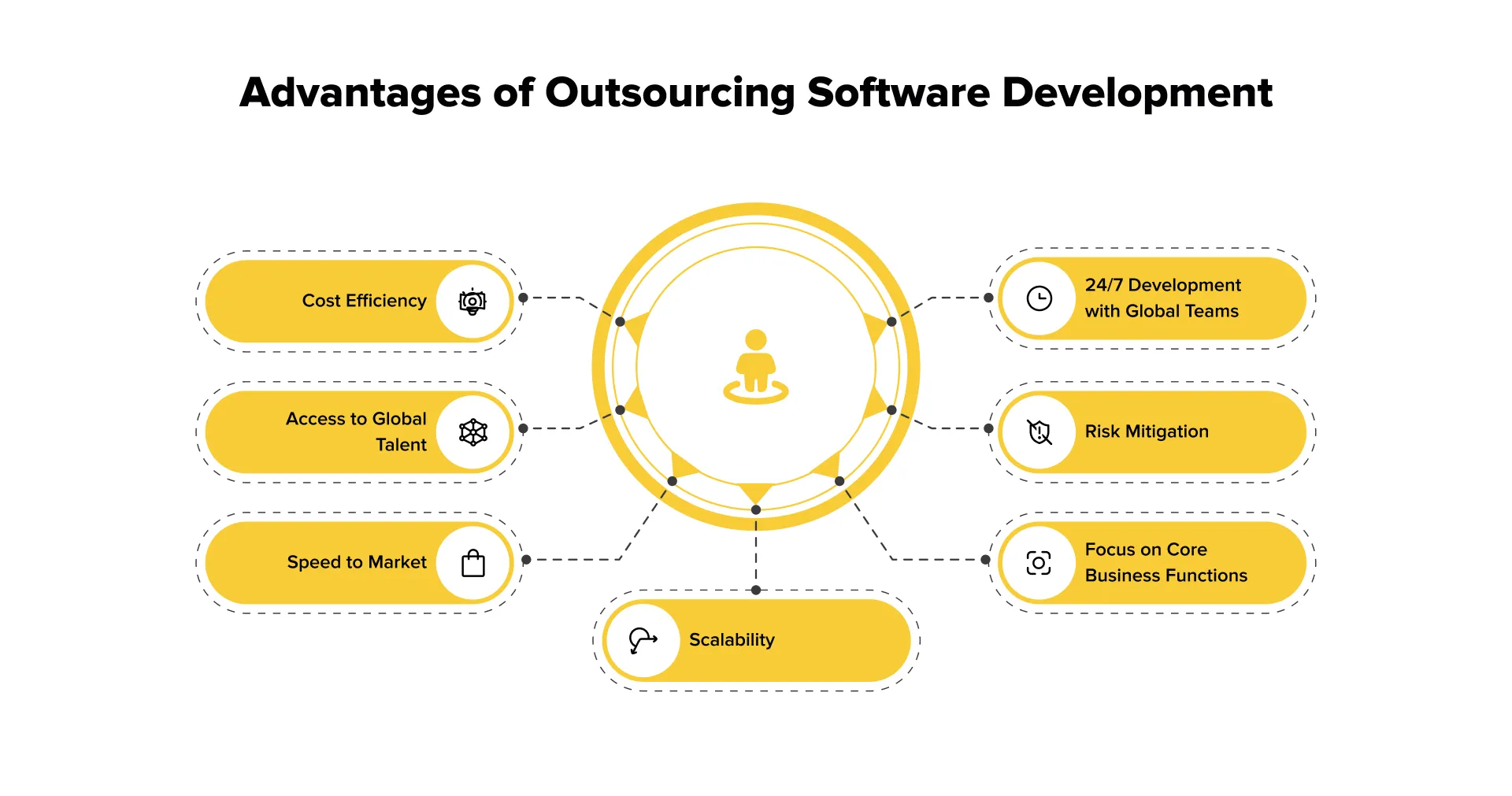
Let's start with the positive aspects: the advantages of outsourcing software development. It should be noted that outsourcing can save you time and possibly finances and provide your business with high-quality software solutions.
But it's essential not to consider this model as a definite cure-all. Even if you're outsourcing, it doesn't guarantee the success of your software projects in the target market. Outsourcing development is the execution of the client's project, but no more. The idea, concept, positioning, and even promotion fall within the product owner's responsibility.
As for the technical side of the issue, outsourcing provides the maximum capabilities of a dedicated team of developers. So, let's focus on the competitive advantages of the model.
Cost Efficiency: How Outsourcing Can Lower Your Overall Expenses
When it comes to the most essential benefits of outsourcing software development services, cost efficiency takes first place. Here's why:
The Pros And Cons Of Outsourcing Software Development: Key Insights for Business Success
You don't spend on hiring and maintaining an in-house team;
You pay only for working hours and results;
You don't need to buy equipment or technologies;
You can avoid supporting the product;
You mitigate risks associated with schedule delays.
Moreover, you enter the market on time, can simultaneously develop multiple products, and address more business needs than possible with in-house implementation. Therefore, an outsourcing partner allows for reducing your overhead costs and potential risks, enabling faster monetization of IT solutions. It's a 2-in-1 saving and profit.
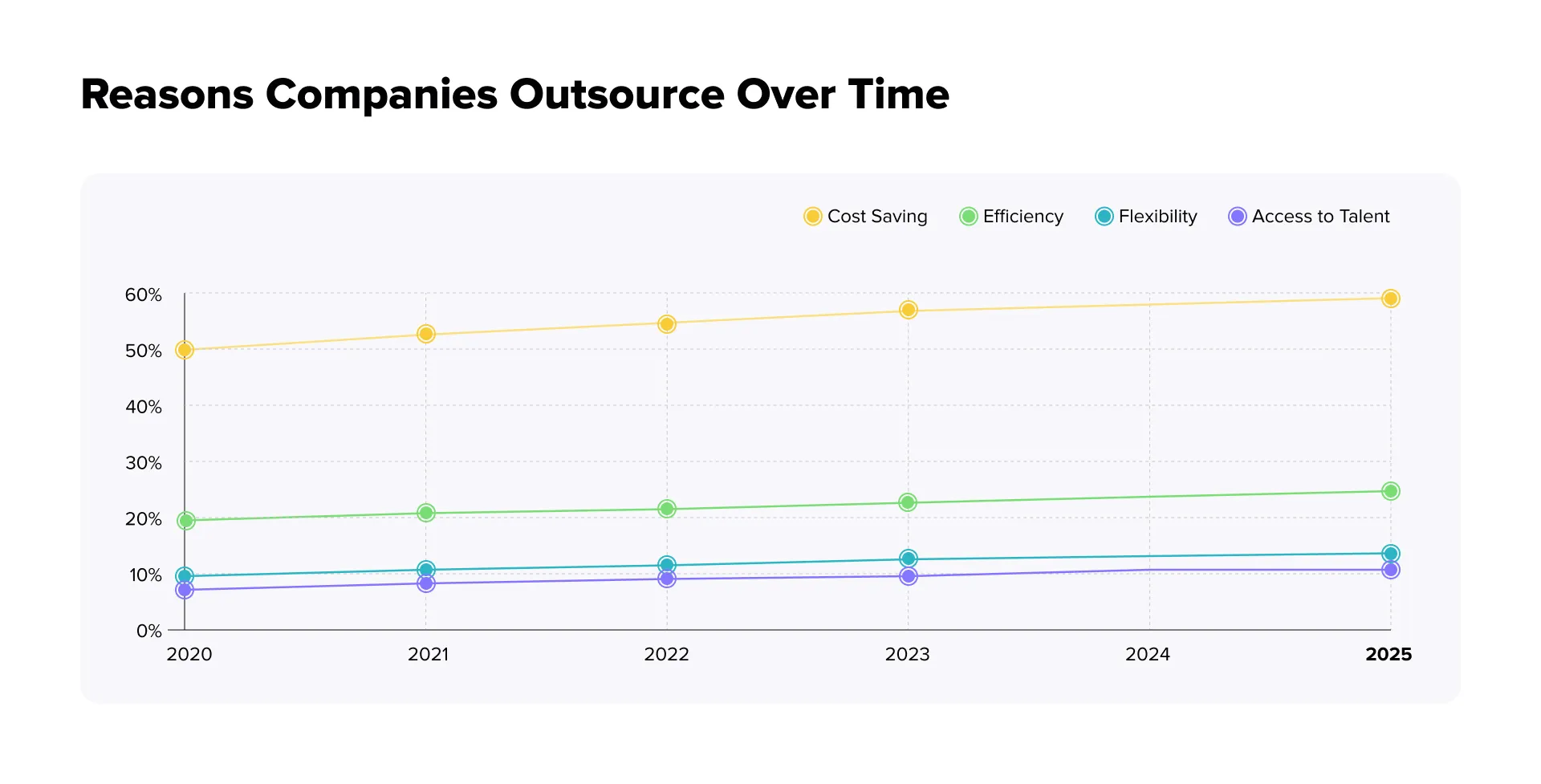
According to a 2025 summary, nearly 59% of companies cite cost reduction as their primary reason for outsourcing. According to 35 outsourcing statistics for 2025, businesses report average cost savings of 15-30% through outsourcing.
Access to Global Talent: Why Outsourcing Expands Your Options
Outsourcing gives many companies access to a global pool of developers with diverse skill sets, enabling them to tap into talent they might not find locally. This approach allows businesses to scale rapidly, access specialized expertise, optimize costs, and focus internal resources on strategic tasks.
There are several confirmations of this, such as:
Most genuinely talented developers work with an outsourced team and a specific service provider.
Experts, not limited to an in-house technical stack, have broader qualifications and more experience.
An external software development team understands and focuses on core business needs.
An external contractor can independently implement a mobile or web development project without issues.
Every provider cares about its reputation and provides clients with only quality services.
Here’s how each region provides diverse advantages to companies looking for outsourcing specialists.
1. Eastern Europe
Strengths: Highly skilled engineers, strong technical education systems, expertise in advanced domains, including AI, fintech, and cybersecurity. For example, Eastern Europe is described as “the hub of quality engineering” with many developers skilled in complex problems.
Cost/Rate: While not the very lowest cost, it offers a good balance of cost vs. software quality.
Business/Compliance: Many countries in this region have strong regulatory frameworks (e.g., GDPR), stable infrastructure, and good English proficiency in the tech community.
2. India
Strengths: Very large talent pool of IT specialists, broad coverage of technologies, and strong English language proficiency in many cases. E.g., India has over 4 million IT professionals according to some sources.
Cost/Rate: Among the most cost-competitive major outsourcing destinations, enabling large-scale work and long-term support.
3. Latin America
Strengths: Near-shore advantage for North American companies (time zones, cultural affinity, relatively strong English skills in many hubs). E.g., “time zone alignment” is a key benefit.
Cost/Rate: Higher than India in many cases, but still favourable compared to North America/Western Europe; approximately US$30-60/hr depending on country and seniority.
Speed to Market: Accelerating Your Product Development Cycle
In the software outsourcing pros and cons list, one of the most crucial advantages is saving time for the company through remote development. When you manually implement a product, you may face problems, schedule shifts, etc. Outsourcing allows flexible management of the development team, scaling it, and speeding up development processes.
This allows you to deliver a digital solution to the target market on time and save time and money.
Additionally, outsourcing ensures high-quality IT solutions. You won't have to spend time and finances fixing issues at release, postponing product publication, and so on.
For instance, a global hotel chain outsourced McKinsey application development and achieved a 25% reduction in time-to-market.
Scalability: Adjusting Team Size to Meet Changing Business Needs
Another essential benefit of outsourcing development is the high level of scalability of the team that you hire.
Depending on your needs, you can easily scale your team up or down, and that’s much easier to do than with an in-house team. It’s crucial when working on different types of projects with unpredictable changes in workload.
For instance, you need to build an MVP for your pilot project. You can scale the team working on the project by augmenting it if you don’t want to hire new staff for the project itself. If you don’t get the desired results, scaling down carries much less reputational risk – you’re just scaling down your commitment to a vendor.
Focus on Core Business Functions: Freeing Your Team to Innovate
One of the key benefits of outsourcing development is allowing you to focus more on your core business purposes. It’s very important when it comes to businesses that are not related to software development. For instance, you are a retail company and your purpose is to build an e-commerce app. In this case, you need a team of developers to design it. However, it’s costly to hire and manage a full in-house team. In this case, you can delegate this task to the outsourcing development team.
Among the large-scale real-world company examples, we can emphasize Skype and GitHub, which outsourced their initial MVP development to an external consultant. Outsourcing services allowed them to focus more on marketing, sales, and software product development.
Risk Mitigation: Leveraging Expertise for Project Success
Outsourcing a development team helps reduce project risks thanks to the high-level experience of the outsourced teams in these ways:
Companies that outsource often have completed dozens or hundreds of similar projects, have reusable components, templates, and best-practice frameworks.
Outsourced teams have faced a huge number of pitfalls, for instance, scope creep, mis-estimated integration work, technical debt, QA bottlenecks, and building safeguards up-front.
This means less reinventing the wheel, fewer surprises, and less risk that the team will stumble because they haven’t done something like it before.
For instance, a financial-technology startup needed to build a mobile banking/payments platform that integrated KYC, multiple payment gateways, audit logging, and regulatory compliance. Their in-house team was small, lacked deep experience in the fintech domain, and risked missing deadlines and introducing errors that would force rework. They engaged an outsourcing partner with proven experience in regulated financial applications.
Time Zone Advantage: 24/7 Development with Global Teams
When you hire an outsourcing team in a different time zone, this isn’t just a logistical challenge leading to misunderstandings — it can become a strategic advantage for continuous development, testing, and delivery. Let’s consider how. It allows providing a project with a 24/7 Development Cycle ("Follow-the-Sun").
With teams across two or more time zones, work can seamlessly hand off from one location to another. For instance, when the on-shore team finishes its day, the off-shore team picks up development or testing, and by the time the on-shore team returns, a new work block or issues are ready.
This hand-off model reduces time and keeps the project working even after local business hours.
Potential Cons of Outsourcing Software Development
We've covered the most essential benefits of outsourcing behind. Now, let's delve into potential drawbacks that customers of offshore software development companies may encounter.
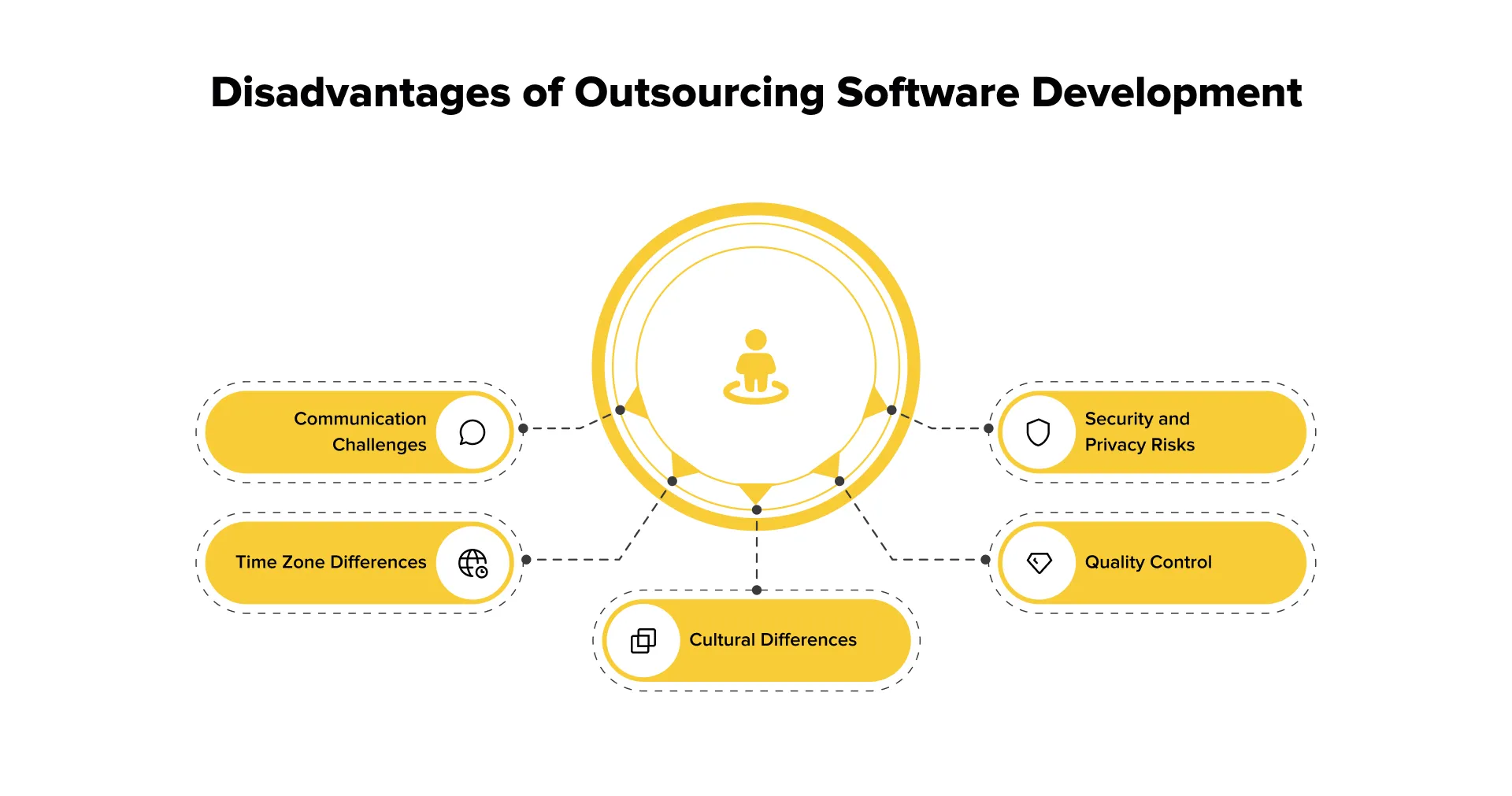
Some of these issues are related to differences in time zone, team cultures, values, and approaches. However, not all negative aspects are critical and can be overcome by finding the right approach.
Communication Challenges: How to Overcome Barriers
According to a recent study, around 90% of businesses think that communication is one of the key challenges when it comes to outsourcing. This can arise from a number of factors, including culture (both national and organizational), language, and the distributed nature of teams.
This can be further compounded by the client/service provider dynamic, where the outsourcing team might feel compelled to be agreeable towards the client and not challenge unachievable requests, ultimately leading to disappointment when results are not achieved.
To solve this problem, find the right communication tools, including Slack and Zoom, that can help overcome communication barriers. Moreover, pay attention to high-quality management tools, including Jira and Trello. Set up regular check-ins to evaluate project progress.
Ensure that the outsourced team members have a good command of English, using an established standard such as the Common European Framework of Reference (CEFR), and ensure that your outsourcing contract states the appropriate minimum standard you require for any new resource.
Time Zone Differences: Turning the Challenge into an Advantage
We have already mentioned time zone differences as an advantage, but it can also be an issue that companies face when hiring an outsourcing team.
To solve this problem, when teams work in different time zones, use asynchronous communication and manage workflows to account for time differences.
For instance, IBM had early global software development teams implementing FTS ("follow-the-sun"). For instance, they distributed work across sites in the U.S. and Australia (which succeeded) and other combinations that were less successful.
One more example is Infosys, which applied FTS-style handoffs in some phases of its global software delivery, although its experience showed that FTS has limited applicability depending on task type.
Company Morale and Cultural Differences: Mitigating Risks
One more problem when it comes to outsourcing development is cultural differences and language barriers. This impacts the communication between teams negatively. Misunderstanding can kill a project before it even gets started.
According to statistics, 60% of all outsourced projects fail due to poor cultural compatibility.
Create a friendly communication atmosphere, even if a part of the team is in another country. Improve cultural connection and team collaboration.
One of the ways to solve this problem is to hire the right company from a country that’s culturally close to yours.
But, even that’s not a guarantee — you need to make sure they communicate clearly and openly.
Managing Quality Control: Ensuring High Standards
Managing quality control is a real quest when hiring an outsourcing team. When it comes to outsourcing, you can face a typical horror story — poorly-written code for your website or application. It’s a great risk to work with unfamiliar suppliers or new teams. Moreover, it’s very hard to provide quality control remotely.
The best way to solve this problem is to incorporate quality assurance (QA) from the start.
In this way, you’ll detect any issues as soon as they happen — and this is important because the longer you wait to fix them, the more expensive they are to fix.
Moreover, to avoid essential mistakes in the result, sign an SLA (Service Level Agreement) and discuss quality standards at the project start.
Risk Management in Outsourcing: How to Stay in Control
There is an opinion that no external supplier can match an in-house team's responsiveness and service levels, because you can’t control a vendor as you can your workforce. Initially, a lack of control isn’t a risk itself, but it can lead to negative results.
There are several solutions to this issue. Let’s consider all of them:
Transparency between your company and an outsourcing team is the most essential item regarding which elements you will control. A “RACI” document showing responsible/accountable/consulted/informed can help here.
Pay attention to outcomes and metrics, whether it be throughput, customer experience, or something else. When you allow an outsourcing team to focus on results, it can lead to some delays.
Demand regular reports providing periodic updates on tasks.
Security and Privacy Risks: Protecting Sensitive Information
Sharing sensitive information with external companies causes high risks, including:
Data breaches
Intellectual property theft
Compliance issues with data protection regulations (e.g., GDPR)
To solve the security and privacy problems, use encrypted communication platforms, including Signal and Slack, cloud services with strong security protocols, including Amazon Web Services, Microsoft Azure, and Google Cloud. In addition, you can use security monitoring software, including CrowdStrike, Splunk, and Fortinet.
How to Use Software Outsourcing Services to Grow and Thrive
Outsourcing software development pros and cons should not be an obstacle for you with the right approach to finding partners. You need to hire a top company for outsourcing whose reputation leaves no room for doubt. This way, you will receive services that help your business thrive.
You can delegate time-consuming tasks for outsourcing that require access to specialized skills. For outsourcing, the most suitable tasks include non-core activities, routine and repetitive tasks, specialized services, scalable tasks, and financial and legal support.
Tasks that should be kept in-house include core business functions, sensitive and confidential information, customer relationship management, company culture, internal communication, quality control, and critical reviews.
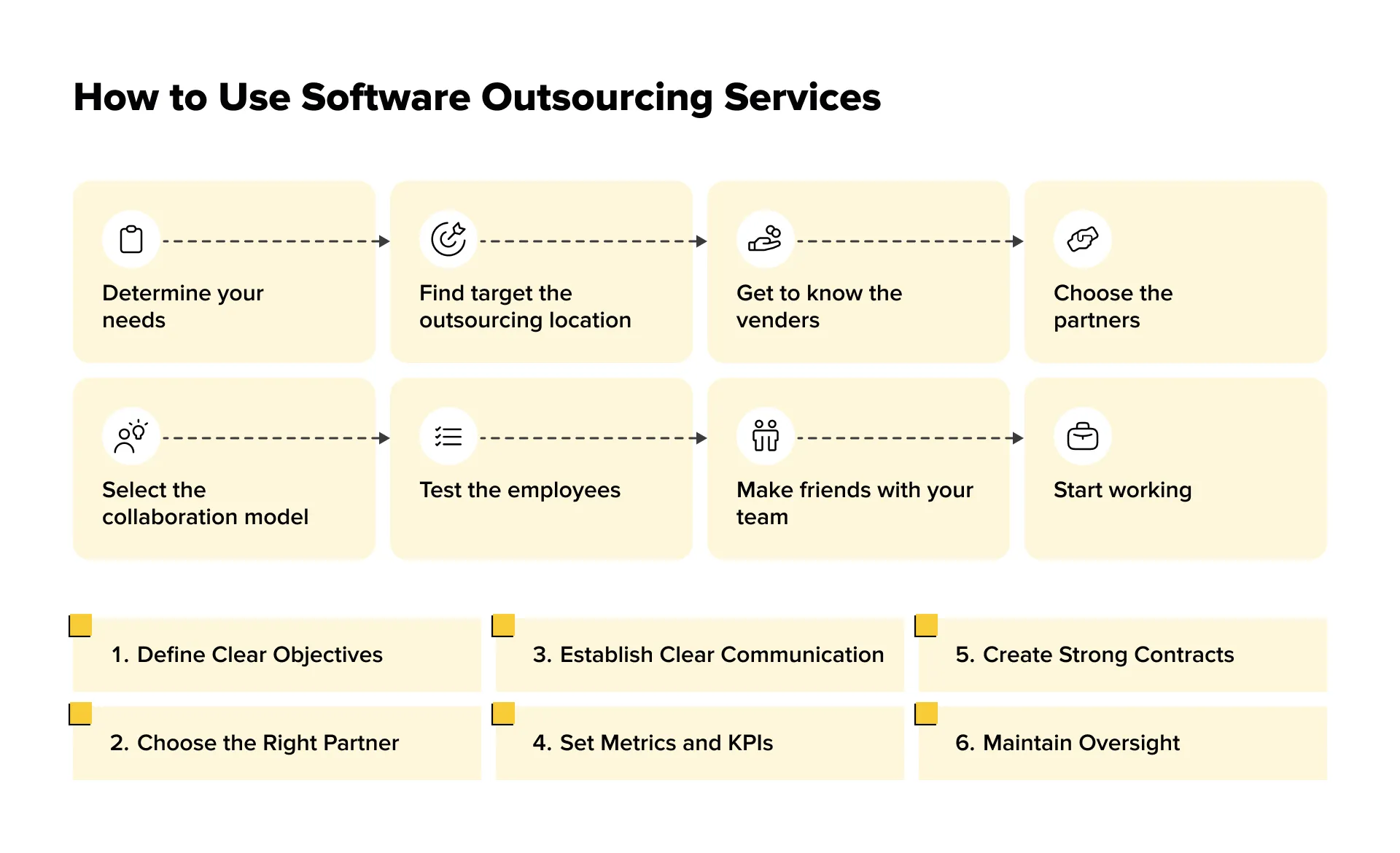
To use software outsourcing services correctly, follow this step-by-step guide:
Define Clear Objectives: Understand the main reasons for outsourcing, including cost reduction, accessing specialized expertise, enhancing operational efficiency, or freeing up internal resources. Defining clear objectives will help you set tasks for an outsourcing team properly.
Choose the Right Partner: Look for an outsourcing team that has the right skill set, experience, and a proven track record in the tasks. Monitor their capabilities, reviews, and security measures.
Establish Clear Communication: Set up communication channels to ensure effective communication with your outsourcing partner. Use tools, including project management software, encrypted communication platforms, and regular check-ins to monitor progress and get updates.
Set Metrics and KPIs: Define key performance indicators (KPIs) to measure the success of the outsourcing task. This helps get high results and solve issues at the first stage.
Create Strong Contracts: Sign contracts that clearly define expectations, timelines, deliverables, service-level agreements (SLAs), confidentiality agreements, and penalties for non-compliance. Make sure both parties understand and agree on the terms.
Maintain Oversight: While outsourcing reduces the internal workload, you need to manage the outsourcing workflow. For this, use regular audits, performance reviews, and risk assessments.
Outsourcing development with the Lampa Software team ensures the timely completion of projects with a level of quality that rivals products from IT corporations.
Outsourcing Software Development: Service Costs by Country
After examining the pros and cons of outsourcing IT services, let's move on to a more practical question—their costs. You have access to talents from all over the world. However, depending on the economic situation, tax burdens, and similar factors, the price for the same specialist's work can vary significantly.
Outsourcing development costs vary significantly depending on the country or region where the development team is located. Many factors influence pricing, including developer expertise, technology stack, project complexity, and market demand. When it comes to choosing the right country, you should balance between cost, quality, and reliability of services.
While choosing a country that matches the project’s budget and technical requirements, pay attention to the relationship between average costs for outsourcing services and the technical requirements of your project:
India and Southeast Asia (e.g., Philippines, Vietnam): Low to Medium cost – Ideal for software development, customer service, and backend support.
Eastern Europe (e.g., Ukraine, Poland, Romania): Medium cost – Excellent for high-quality software development, UX/UI design, and technical solutions.
Latin America (e.g., Mexico, Brazil, Argentina): Medium cost – Great for North American companies thanks to closer time zones and cultural compatibility.
Western Europe and North America: High cost – Best for highly specialized work that requires a high level of expertise.
Consider the table of approximate hourly rates for outsourcing developers based on their region of residence:
Region | Example Countries | Cost Level per Hour | Primary Strengths / Ideal Use Cases |
India and Southeast Asia | Philippines, Vietnam, India | Low to Medium: Mid ~$20-30 Senior ~$30-50+ | Ideal for software development, customer service, and backend support |
Eastern Europe | Ukraine, Poland, Romania | Medium: Middle ~$30 – $40 Senior ~$40-60+ | Excellent for high-quality software development, UX/UI design, and technical solutions |
Latin America | Mexico, Brazil, Argentina | Medium: Middle ~$35 – $70 Senior ~$65-100+ | Great for North American companies due to closer time zones and cultural compatibility |
Western Europe and North America | USA, Canada, UK, Germany, France | High: Middle ~$80 – $135 Senior ~$100-150+ | Best for highly specialized work requiring advanced expertise |
Lampa Software: Your Trusted IT Outsourcing Partner from Ukraine
Lampa.dev offers a wide range of benefits for companies hiring outsourcing software development services:
Competitive prices: Despite being highly skilled experts, our team offers software development services at moderate prices, which are much more cost-effective than similar services in America or Western Europe.
Deep Technical Expertise: The knowledge and experience level of our developers is on par with our counterparts in other countries. Our developers are proficient in all major programming languages, including the most common ones like JavaScript, C++, and Python, as well as more specialized languages like Kotlin and Objective-C.
Language Proficiency: Since Lampa.dev focuses on collaborating with international partners, our English proficiency is quite high. For European clients, this significantly minimizes certain negatives of outsourcing.
Cultural Similarity and Schedule: Ukraine shares a close cultural affinity with European countries, facilitating communication and understanding of your project's requirements. Additionally, there is a slight time zone difference with Western Europe, ensuring convenient cooperation and communication.
Team flexibility: In the case of collaboration with companies from North America, specialists are readily adaptable to the conditions.
Experience working with international clients: We have worked in the international market. Among the most successful cases with international clients, we can emphasize THD, Dogiz, Audiokitab, and others.
Transparency of cooperation: Our team provides our customers with regular reports that contain updates on current tasks via different communication channels, including Zoom, Slack, Google Meets, and others. In addition, we use dashboards, including Trello, Jira, and Asana to manage our workflow and showcase results to our client at different stages of the project development.
Lampa.dev is a reliable partner who can help implement the project and achieve business goals with the help of its cutting-edge outsourcing experience. Like other Ukrainian enterprises, we are diligently working to support Ukraine's economy. By partnering with us, you are helping our country grow stronger and continue the fight for a free and peaceful life.
Looking for a Ukrainian outsourcing team of development experts combining high cost-effectiveness and deep technical expertise? Contact us