
The retail industry has changed faster than ever over the last decade. Digital-first brands, mobile shopping and increasing customer expectations have transformed the way consumers find, compare and purchase products. Now, retail digital transformation is a must-have. It's a necessity for retailers that sell through both physical and online channels to stay competitive.
According to Statista, global spending on digital transformation is projected to reach $3.9 trillion by 2027, with retail being one of the fastest-growing sectors adopting digital technologies.
Digital transformation in retail helps companies rethink customer journeys, modernize store operations, and unify online and in-store experiences. In this article, we explore what transformation really means, what drives it, which technologies matter most, and how retailers can start building a future-ready digital strategy.
What is Retail Digital Transformation?
Retail digital transformation is the integration of digital technology into all areas of retail operations. It’s not just about acquiring new technology or launching an e-commerce store. A wholesale transformation of how value is delivered to the customer and how decisions are made within the enterprise is what defines true digital transformation in retail.
This transformation shifts retailers from physical-first thinking to digital-first strategies. It moves companies from isolated systems to unified platforms and from intuition-based decisions to data-driven ones. Importantly, retail industry digital transformation is an ongoing process. Customer expectations, technologies, and market conditions continue to evolve, and retail organizations must adapt continuously.
The Growing Demand for Digital Transformation in Retail: Key Drivers
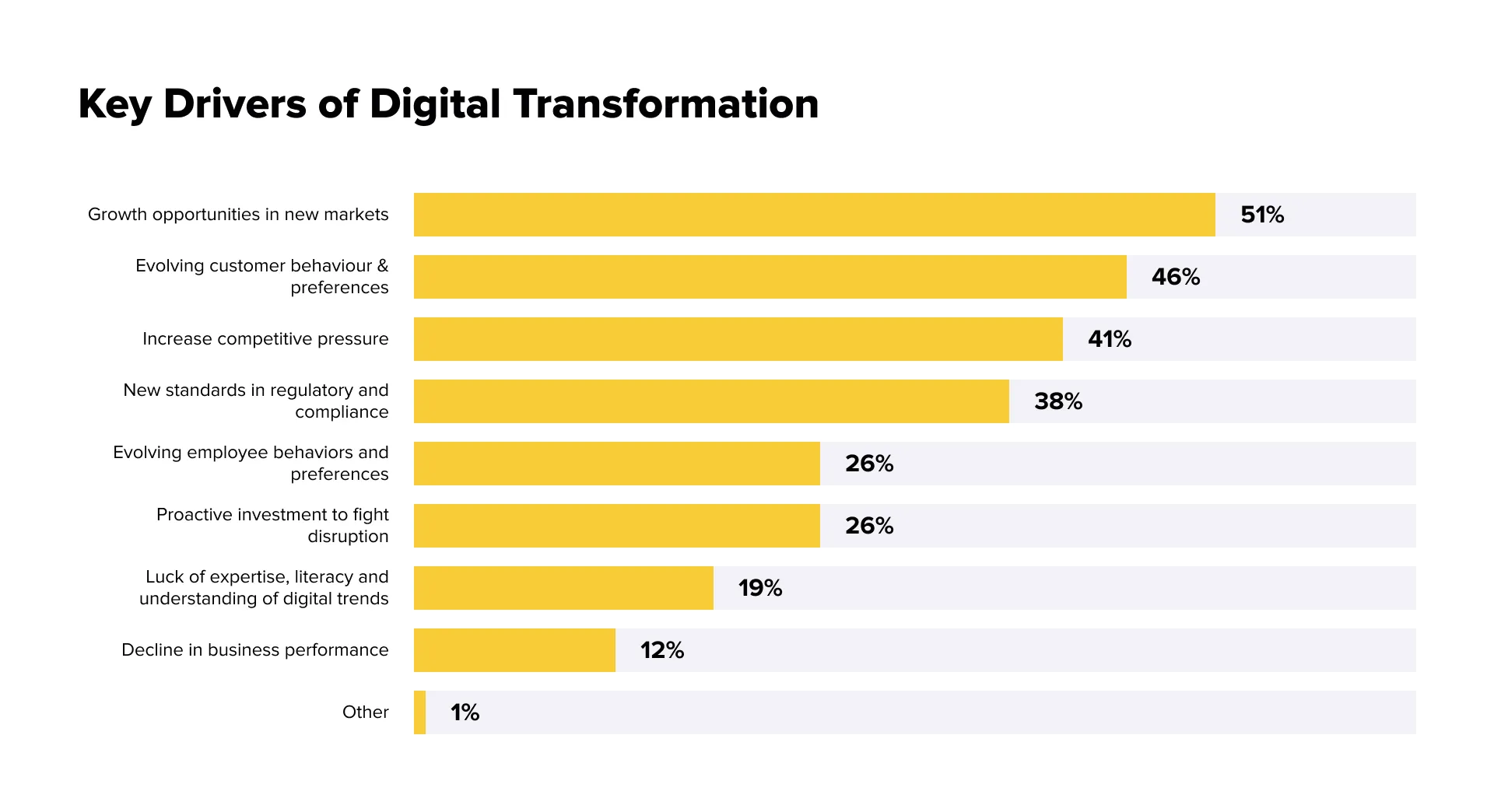
The demand for retail and digital transformation is shaped by several interconnected factors, with changing shopper behavior at the center. Customers now move freely between online and in-store channels and interact with brands across multiple touchpoints before making a purchase. According to Salesforce, 73% of customers expect companies to understand their individual needs and expectations, no matter how they choose to engage.
At the same time, digital commerce continues to grow. Statista reports that global retail ecommerce sales are projected to exceed $6.3 trillion by 2024, increasing pressure on retailers to deliver consistent and convenient shopping experiences across every channel.
Technology plays a decisive role in this shift. Innovations in AI and machine learning, cloud platforms and analytics tools are enabling retail organizations, regardless of size, to access digital solutions. Competition from e-commerce-native brands is also speeding up change, making traditional retailers reconsider how digital and physical experiences journey together. These pressures naturally lead to a deeper look at what retailers gain when transformation is done right.
Key Benefits of Digital Transformation in the Retail Industry
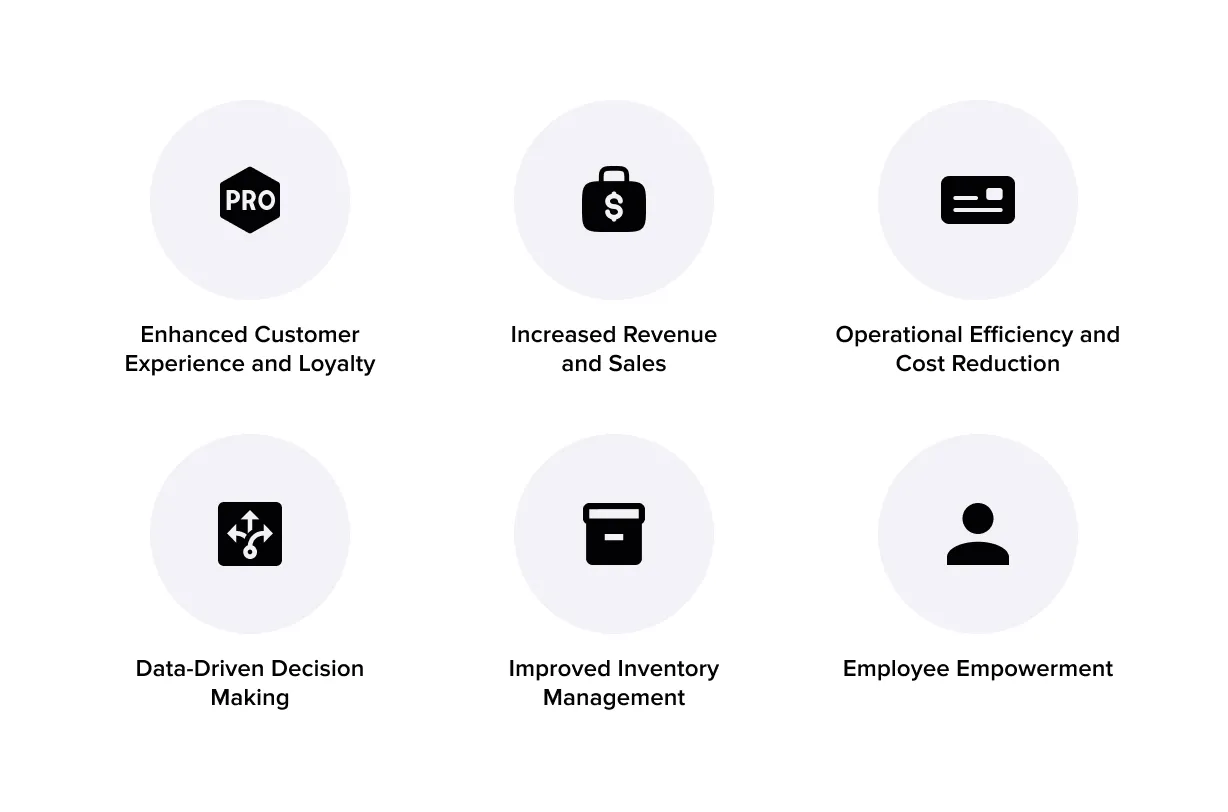
Retail transformation becomes visible when numbers start changing. Faster checkouts, fewer stock issues, higher repeat purchases — all of these are direct results of digital processes working together. Digital transformation in retail turns everyday operations into a connected system where customer actions, inventory, and analytics influence each other in real time. Below are the key benefits that show how this approach impacts performance across the entire retail business.
Enhanced Customer Experience and Loyalty
Digital transformation in retail begins with how customers feel at every interaction. Today's platforms integrate e-commerce stores, mobile applications, CRM, and store locations in a single ecosystem. This draws a seamless omnichannel line for customers to browse, buy, return or receive support without impediments. Retail digital transformation enables brands to identify customers across touchpoints and deliver a consistent response.
According to Omnichannel research, shoppers who engage with multiple retail channels generate about 30% higher sales revenue and have a 30% higher lifetime value compared to single-channel customers. Additionally, strong omnichannel engagement helps retailers retain around 89% of customers, far surpassing retention rates of less integrated approaches.
A simple example is click-and-collect. Customers order online and pick up in-store. This saves time and increases repeat visits.
Increased Revenue and Sales
When customer experiences are connected, the result is a natural path to revenue growth. Digital tools create new sales channels such as marketplaces, social commerce and mobile applications. Meanwhile, the conversion rates are enhanced by AI-based recommendations. Retail software development can enable you to test offers and change prices in real time.
AI supports cross-selling and upselling by analyzing browsing history and purchase behavior. Many retailers see conversion growth of 10–20% after implementing smart recommendations. For example, an online fashion retailer can suggest matching items at checkout and increase average order value without aggressive discounts.
Operational Efficiency and Cost Reduction
Automation is a core benefit of digital retail transformation. Routine tasks like order processing, reporting, and stock updates no longer require manual effort. Inventory systems automatically sync with sales data, reducing errors and delays.
Retailers often reduce operational costs by 15–30% through automation and better planning. Staff can focus on customer service instead of paperwork. For instance, automated replenishment prevents emergency restocking and lowers logistics expenses.
Data-Driven Decision Making
Digital systems provide real-time insights into sales, demand, and customer behavior. Predictive analytics helps forecast demand with higher accuracy and plan promotions more effectively. Pricing decisions become data-based, not intuitive.
Retailers using predictive models often improve forecast accuracy by 20–40%. This leads to fewer lost sales and better margin control. For example, demand prediction helps avoid aggressive discounts at the wrong time.
Improved Inventory Management
Real-time inventory visibility is essential for modern retail. Digital platforms reduce stockouts and overstocking by syncing sales and supply data instantly. This balance improves cash flow and customer satisfaction.
Many retailers report up to 25% fewer stockouts and 20% lower excess inventory after digital optimization. A connected inventory system ensures the right products are available at the right place and time.
Employee Empowerment
Digital tools also transform internal workflows. Employees gain access to dashboards, mobile POS systems, and customer data. This simplifies daily tasks and improves confidence in customer interactions.
Retailers often see higher employee satisfaction and improved retention after digital upgrades. Better tools lead to faster service and stronger customer relationships.
Together, these benefits create a strong competitive advantage. Digital transformation supports sustainable growth by aligning customer needs, operational efficiency, and data-driven strategy into one scalable retail model.
Key Technologies Powering Retail Digital Transformation
Retail digital transformation is based on a fusion of several advanced technologies. Each of these technologies addresses a different set of challenges, from personalization to operations. The impact is greatest when the tools are combined into one ecosystem. Below, we review the key technologies and discuss how they are used in real retail cases.
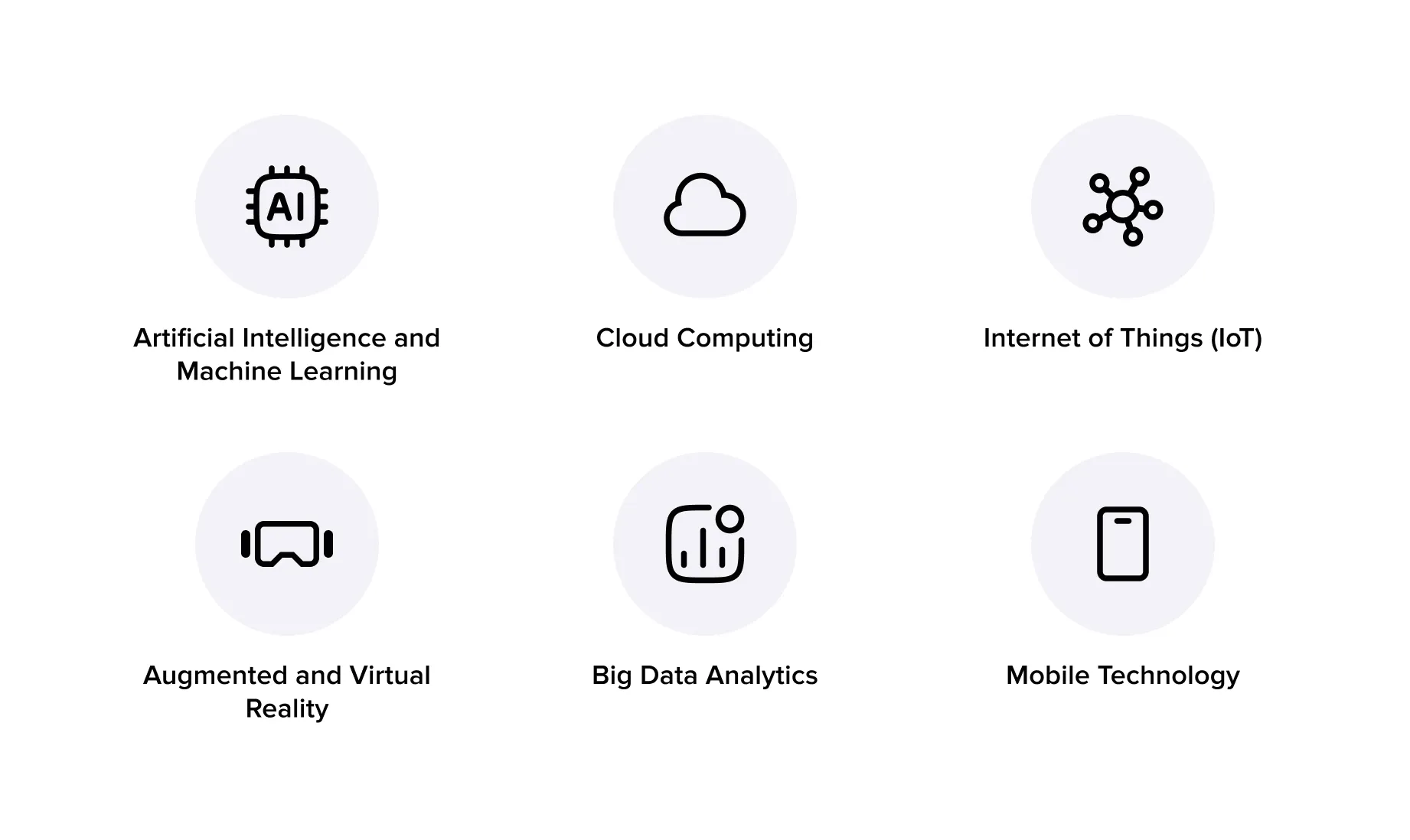
Artificial Intelligence and Machine Learning
Artificial intelligence and machine learning enable retailers to transition from reactive decisions to predictive decisions. AI processes customer behavior, purchase history and real-time signals to provide personalized product recommendations, enable visual search and power chatbots and virtual assistants.
Beyond customer-facing features, AI improves demand forecasting, dynamic pricing, inventory optimization, and fraud detection. According to McKinsey, more than 60% of retail companies already use AI in at least one business function.
Amazon is a clear example of AI at scale. Its recommendation engine generates roughly 35% of total revenue. Retailers implementing AI-driven personalization typically see ROI growth of 10–30% through higher conversion rates and lower operational losses.
Cloud Computing
Cloud computing creates the foundation for scalable retail systems. It enables rapid growth during peak periods and removes the need for large upfront infrastructure investments.
Cloud platforms centralize data and ensure real-time synchronization across online stores, mobile apps, and physical locations. This is especially important for omnichannel operations.
Cloud-based POS systems simplify updates, improve security compliance, and reduce downtime. Many retailers migrate legacy POS and ERP systems to the cloud and reduce IT and infrastructure costs by 20–40% while increasing system stability.
Internet of Things (IoT)
IoT solutions for retail play a critical role in connecting physical stores with digital systems. IoT connects physical retail environments with digital platforms. Smart shelves, RFID tags, and connected sensors provide real-time inventory visibility and automate stock tracking, reducing manual effort and errors.
In-store sensors collect data on customer movement and engagement. This helps retailers optimize store layouts, product placement, and staffing decisions based on actual behavior rather than assumptions.
IoT also supports smart mirrors, interactive displays, and seamless checkout experiences. Retailers using connected devices report shrinkage reduction of up to 20% and faster inventory audits. Zara is a strong example, using RFID technology to track products across stores and warehouses, reduce stock inaccuracies, and improve replenishment speed.
Augmented and Virtual Reality
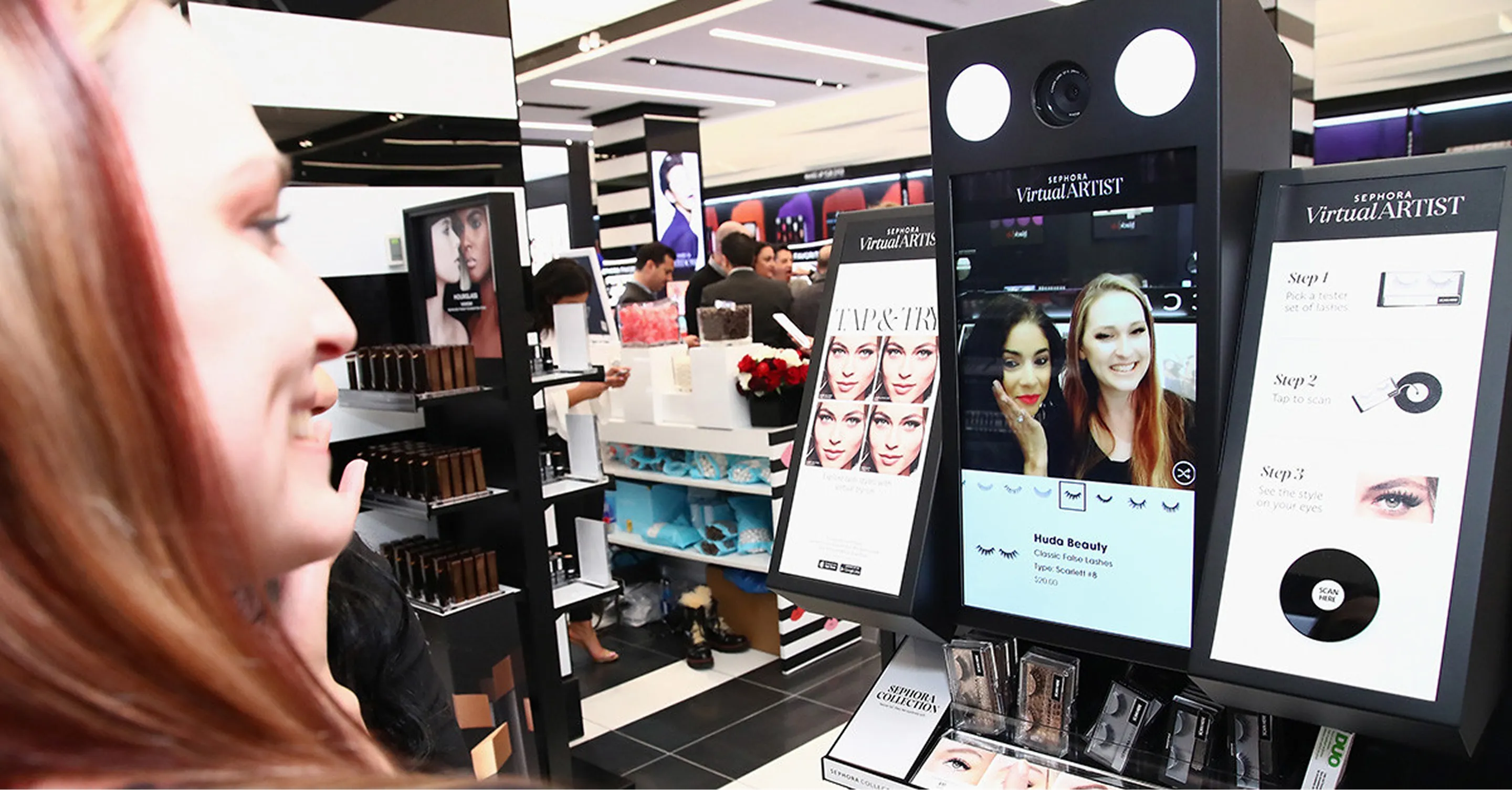
AR and VR enhance how customers explore products before buying. Virtual try-ons are widely used in fashion and beauty, while AR visualization helps customers see furniture or home goods in real environments.
The AR/VR retail market grows by over 20% annually. Solutions like IKEA Place and Sephora Virtual Artist improve conversion rates and reduce returns by increasing confidence in purchase decisions.
Big Data Analytics
Big data analytics helps retailers turn raw data into actionable insights. It brings together information from POS systems, eCommerce platforms, mobile apps, and supply chains into one analytical layer. This makes customer behavior analysis and market trend detection more accurate.
Predictive modeling allows retailers to anticipate demand shifts, identify high-value customers, and adjust assortments in advance. Pricing and promotions become data-driven instead of reactive.
With a unified data infrastructure, retailers can personalize offers at scale and respond faster to changes in demand. Analytics-driven companies improve forecast accuracy by up to 40%, which directly reduces stockouts and unnecessary markdowns.
Mobile Technology
Mobile technology has become a central part of the retail experience. Mobile apps support product discovery, payments, loyalty programs, and personalized offers in one interface. For many customers, a smartphone is the main shopping tool.
Inside the stores, queues are shortened and service is sped up by mobile POS systems and self-checkout. Staff are able to serve customers anywhere on the shop floor, rather than being tied to fixed points of sale.
Location services for in-store personalisation in real time and mobile payment for payment convenience. Mobile commerce already accounts for over 60% of the global online retail traffic. Starbucks is a powerful example of mobile success, with payments, rewards and personalization all wrapped up in one app that incentivizes frequent visits and repeat purchases.
Core Elements of Successful Retail Digital Transformation
Effective retail digital transformation is not simply about technology — it is the result of a combination of factors. The whole company has to participate, from IT to operations and customer service. Real transformation is the alignment of systems, data, processes, and people to deliver a seamless customer experience while driving internal efficiency. Here are the essential ingredients for a winning transformation strategy.
Unified Commerce Infrastructure
A unified commerce system ensures that sales channels are all working off the same platform. Unified customer and product inventory databases provide real-time updates and meaningful insights. Fully integrated eCommerce, mobile app and brick and mortar store solutions minimise mistakes and maximise efficiency of operations.
Retailers that have unified systems can centralize inventory management, provide accurate stock visibility and rapidly roll out promotions across all channels. It is the infrastructure upon which omnichannel experiences and data-driven decisions are built.
Omnichannel Customer Experience
Delivering a consistent omnichannel customer experience is critical. Unified customer profiles allow personalized communication, cross-channel returns, and smooth processes like BOPIS (buy online, pick up in store) or curbside pickup.
Customers expect the same experience whether they shop online, via app, or in-store. Retailers who achieve this consistency see higher engagement, repeat purchases, and loyalty.
Modern Point of Sale Systems
Modern POS systems are cloud-based, mobile-ready, and fully integrated with eCommerce platforms. Real-time data synchronization ensures inventory accuracy and fast checkout. Mobile POS allows staff to assist customers anywhere on the floor, improving service and reducing wait times.
By using modern POS, retailers streamline operations, gain accurate reporting, and create a better shopping experience across all touchpoints.
Data-Driven Culture
A data-driven culture ensures analytics guide every decision. Retailers democratize access to insights, train staff to interpret data, and foster a mindset of evidence-based decision-making.
When teams rely on accurate data rather than intuition, they can identify trends, improve inventory planning, and enhance customer experiences. Analytics tools become part of everyday workflows.
Agile Processes and Methodologies
Agile methodologies help retailers implement change iteratively. Short sprints, pilots, and quick wins allow testing new ideas without disrupting operations.
Continuous improvement becomes part of the culture, with teams adapting quickly based on customer feedback and performance metrics. Agile practices reduce risk and accelerate transformation.
Change Management and Employee Enablement
Successful transformation requires employee enablement. Training programs, clear communication, and structured change management ensure staff understand new processes and tools.
Employee buy-in is essential — engaged employees are more likely to adopt new systems, provide better customer service, and support the transformation long-term.
Real-World Examples of Retail Digital Transformation
Now we’ll examine specific examples of how leading retailers have successfully implemented digital transformation. These case studies show different strategies, technologies, and the measurable results achieved. Each example highlights lessons that other retailers can apply in their own digital initiatives.
Walmart's AI-Powered Transformation
Walmart wanted to make sure products were always available on the shelves and that inventory was managed efficiently. They turned to AI and automation to achieve this. Using predictive analytics, AI-driven recommendations, and warehouse robotics, Walmart was able to anticipate demand and refill stock faster.
The rollout happened gradually. Pilot programs helped test AI solutions in select stores before expanding nationwide. Real-time dashboards gave store managers actionable insights, improving decision-making on the spot.
The results were impressive: stockouts decreased, shelves stayed stocked, and customer satisfaction improved. This case shows that AI combined with automation can streamline operations while keeping shoppers happy.

Sephora's Omnichannel Excellence
Sephora focused on giving customers a seamless experience across channels. AR virtual try-ons, the Beauty Insider loyalty program, and unified customer data allowed shoppers to explore products in-store and online effortlessly.
Interactive digital tools in stores helped staff guide customers and offer personalized recommendations. The impact is clear: omnichannel customers spend 2.5 times more than single-channel shoppers.
Amazon's Personalization Engine
Amazon has turned personalization into a science, constantly finding ways to make shopping feel intuitive for each customer. Their sophisticated recommendation algorithms analyze browsing history, past purchases, and real-time activity to suggest products that shoppers are most likely to buy at any moment.
A culture of continuous A/B testing and iterative improvements allows the company to refine recommendations constantly and adapt to changing customer preferences. Around 35% of Amazon’s sales now come through products suggested by these personalized recommendations, clearly demonstrating the immense power of data-driven decision-making in retail.
IKEA's AR Innovation
IKEA launched the IKEA Place app to help customers visualize furniture in their own homes. Using AR, shoppers can check if a sofa fits, matches the room, or looks the way they imagined.
This technology boosted customer confidence, reduced returns, and increased online engagement. It’s a clear example of how AR can enhance the shopping experience while supporting scalability.

Zara's Supply Chain Optimization
Zara’s fast fashion model relies on rapid inventory turnover, which means products need to move quickly from warehouses to store shelves. To support this, the company digitized its supply chain, ensuring that inventory decisions are guided by real-time data rather than guesswork.
By implementing RFID technology, Zara gained complete visibility into stock levels across stores and warehouses. This allowed staff to restock items faster and reduce overstock, keeping shelves aligned with current trends.
With these improvements, product launches became more agile, enabling Zara to react quickly to changing fashion demands. Inventory turnover increased significantly, costs were lowered, and the brand could stay ahead of competitors.
Challenges of Digital Transformation in Retail (and How to Overcome Them)
Digital transformation offers immense benefits, from faster operations to better customer experiences. However, it also brings significant challenges that can slow progress or create friction within an organization. Successful retailers understand these obstacles and use strategic approaches to overcome them, ensuring that technology adoption delivers real results. Let’s explore the main challenges and how companies navigate them.
Legacy Systems Integration
Many retailers struggle because old systems are not compatible with new technologies. Legacy POS, ERP, and inventory systems often cannot communicate with cloud platforms, analytics tools, or AI solutions.
How to Overcome: Implement a phased migration strategy, integrate systems through APIs, and gradually replace outdated platforms. This ensures operations continue smoothly while modernization takes place.
Retail chains like Target have updated legacy systems in stages, using APIs to connect old and new platforms without disrupting customer experience.
High Implementation Costs
Large upfront investments can be intimidating, especially for smaller retailers. Deploying AI, IoT, or cloud systems often requires significant capital.
How to Overcome: Focus on ROI from the start, run pilot programs, and use cloud solutions to reduce capital expenditure. By proving value early, retailers can justify scaling projects.
Many cloud-based retail initiatives see ROI within 12–18 months, making the initial investment manageable.
Organizational Resistance to Change
Even with the best technology, employees and managers may resist changes. Fear of new processes or tools can slow adoption.
How to Overcome: Implement structured change management programs, involve staff early, communicate clearly, and provide training. Engaged employees are more likely to adopt new systems and improve customer experience.
Companies that follow strong change management see up to 70% higher adoption rates.
Data Security and Privacy Concerns
With more data comes higher risk of breaches or non-compliance. Customer trust can be damaged if privacy or security is not ensured.
How to Overcome: Invest in strong cybersecurity measures, implement compliance frameworks, and maintain transparency with customers about how their data is used.
Trust is critical for digital adoption and maintaining long-term customer loyalty.
Lack of Digital Talent
Many retailers face a shortage of skilled professionals needed to implement and maintain digital initiatives.
How to Overcome: Upskill existing staff, partner with tech companies, or selectively outsource specialized tasks.
Some retailers run internal academies to train employees in AI, analytics, and cloud solutions, bridging the talent gap.
Measuring ROI and Success
It’s often difficult to measure the impact of digital transformation accurately. Without clear metrics, it’s hard to justify further investments.
How to Overcome: Define KPIs early, track progress regularly, and use attribution models to connect initiatives to outcomes. Dashboards can help leadership monitor performance and adjust strategies as needed.
Transparent reporting ensures teams understand which initiatives drive value and where improvements are needed.
Despite these challenges, digital transformation remains achievable. Proven strategies, careful planning, and continuous learning enable retailers to overcome obstacles and capture the full benefits of technology-driven innovation.
How to Start Your Digital Transformation Journey: A Step-by-Step Guide
Starting a digital transformation journey can feel overwhelming, but breaking it into manageable steps makes it achievable. By following a clear roadmap, retailers can minimize risks, optimize resources, and deliver measurable results while staying customer-focused.
Step 1: Assess Your Current State
Before any changes, audit your existing systems and processes. Identify pain points, bottlenecks, and inefficiencies that slow operations. Evaluate your digital maturity and benchmark against competitors to understand where you stand in the market.
This assessment provides a clear starting point, helping prioritize initiatives that deliver the most impact first.
Step 2: Define Clear Goals and Priorities
Align your transformation objectives with business goals. Set measurable KPIs to track progress and ensure accountability.
Prioritize initiatives based on impact and feasibility, balancing quick wins with longer-term projects. This ensures momentum while tackling strategic objectives.
Step 3: Develop a Comprehensive Strategy
Once goals are clear, create a transformation roadmap. Define budget allocation, timelines, milestones, and risk management strategies.
A comprehensive plan reduces uncertainty and provides a framework for execution. Clear strategy helps all stakeholders understand the sequence of actions and expected outcomes.
Step 4: Build the Right Team
Transformation requires a skilled, cross-functional team. Identify internal champions, promote collaboration across departments, and include external partners and vendors to cover expertise gaps.
Building a transformation team with experienced technology partners can significantly accelerate your company’s journey. Our team at Lampa specializes in retail software development services, helping businesses implement tailored solutions—from inventory management systems to omnichannel platforms. By leveraging our expertise in custom retail software, we bridge the gap between your vision and technical execution, ensuring your digital transformation delivers measurable business outcomes.
Step 5: Start with Pilot Programs
Begin your transformation journey with small-scale pilot programs. Start by testing new systems or processes in a limited environment, such as a single store, department, or region. Collect detailed feedback from employees and customers to understand what works well and what needs adjustment. Iteration is key—refine workflows, interfaces, and integrations based on real-world usage before expanding further.
Successful pilots provide critical insights, reduce the risk of large-scale failures, and build confidence among staff and stakeholders.
Step 6: Focus on Data Infrastructure
Ensure a unified data platform that supports analytics, governance, and security. High-quality data is the foundation for AI, predictive analytics, and personalized customer experiences.
Invest in proper security measures and data management processes to protect sensitive information and maintain trust.
Step 7: Invest in Change Management
Clear communication is the foundation of successful change management. Develop comprehensive training programs tailored to different employee roles, ensuring everyone understands new systems, processes, and expectations. Engage employees from the very beginning, involve them in testing and feedback loops, and celebrate early wins to reinforce adoption.
Creating a culture that embraces change is essential. When employees feel supported and confident, technologies are used effectively, workflows improve, and transformation goals are achieved more consistently. Change management also helps reduce resistance, increase engagement, and ensure that digital initiatives have lasting impact across the organization.
Step 8: Measure, Learn, and Iterate
Regularly tracking KPIs and reviewing progress is critical to ensure your initiatives deliver real value. Analyze data from pilot programs and early implementations to identify what works, what needs adjustment, and which processes can be optimized further.
Iteration should be a continuous cycle. By staying agile and maintaining a customer-centric mindset, retailers can quickly respond to feedback, adapt to changing market conditions, and refine technology adoption. This approach not only ensures long-term success but also fosters a culture of continuous improvement where every lesson learned contributes to stronger performance and better customer experiences.
Digital transformation in retail is a step-by-step journey that starts with assessing current systems and setting clear goals. Pilots help test solutions, gather feedback, and reduce risks before scaling. Investing in data infrastructure and change management ensures technologies are adopted effectively. Continuous measurement and iteration allow retailers to refine processes and improve customer experiences. By combining strategy, people, and technology, retailers can drive long-term growth and stay agile in a competitive market.
Future Trends in Retail Digital Transformation
Several emerging trends will shape the next phase of retail digital transformation.
Generative AI in retail and advanced automation will enable conversational commerce, AI-generated content, and deeper hyper-personalization within the next 1–2 years.
Blockchain adoption is growing more gradually, helping retailers improve supply chain traceability, authenticity verification, and sustainable sourcing.
Voice commerce, powered by smart speakers and voice-activated shopping, is expected to expand as hands-free experiences gain acceptance.
Social commerce and sustainability-driven technologies are already influencing purchasing decisions and will continue to mature over the next three to five years.
From AI-driven personalization to blockchain-powered transparency, the next wave of digital transformation is creating retail experiences that are smarter, faster, and more trusted.
Conclusion
Digital transformation is no longer a choice but a necessity for success in modern retail. It is a continuous journey that requires a clear strategy, the right technologies, and strong organizational commitment. While challenges exist, the long-term benefits for customer experience, operational efficiency, and growth clearly outweigh the risks. Retailers that start transformation early gain a lasting competitive advantage.
At Lampa, we help retailers move from ideas to real outcomes through custom retail software development, omnichannel platforms, and data-driven solutions. As a technology partner, we focus on building systems that scale with your business and support long-term transformation. Start your retail digital transformation today with the expert support of the Lampa team.