
Building a fully fledged web application in your own walls can be expensive and time consuming. Hiring qualified web developers, maintaining infrastructure, and delivering reliably can put a strain on the resources of a company — particularly when that company is a small business or startup. That’s why there are so many companies today who actually choose to outsource app development to trusted providers that offer a perfect synergy of technical expertise, scalability and cost efficiency.
For many companies, the choice comes down to a lack of internal capacity. Teams don’t have enough devs, project managers, or business analysts to bust projects this large. Sometimes businesses have technical debt, constrained budgets, or just want to accelerate their product development: Partnering with a development outsourcing company enables them to concentrate on strategy and growth while experts handle execution.
This isn’t just a passing trend — it’s a global shift. According to Grand View Research, the IT outsourcing market reached a value of $744.6 billion in 2024 and is projected to grow at a compound annual rate of about 8.6% throughout the decade. Those numbers illustrate growing confidence among enterprises in outsourcing as a dependable, scalable option.

The companies are no longer treating outsourcing as a gamble. Rather, they see it as the opportunity to pursue a growth strategy that is global in nature while being predictable in pricing and delivery, and that can also be executed more quickly thanks to access to global talent. With Lampa Software, you have the flexibility to develop secure, high-quality, scalable web applications without the burden of hiring a massive in-house team.
Key Reasons to Outsource Web Development
Let’s be honest — building a web app from scratch on your own isn’t easy. It’s expensive, time-consuming, and often pulls your focus away from what really matters: growing your business. That’s exactly why so many founders and teams today turn to outsourcing web development. It’s not just about saving money anymore — it’s a smarter, faster way to innovate and compete globally.
How to Outsource Web App Development successfully: A Complete Guide for Businesses
Access to a Global Talent Pool. When you outsource, you instantly open the door to world-class web developers. Whether you need a React front-end specialist, a Node.js back-end architect, or a full-stack engineer, the right development outsourcing company can connect you with the skills your project needs. Forget about being limited by location — top talent is now just a Slack call away.
Lower Cost, Higher Efficiency. Here’s a number that makes a difference: hiring a senior developer in the U.S. costs around $120–$150/hour, while partnering with a qualified team in Eastern Europe or Asia can bring that down to $40–$60/hour — often with the same or better quality. The savings don’t just stay in your pocket — you can redirect them to design, marketing, or scaling your operations. That’s how outsourcing allows you to keep growing while staying lean.
Faster Time to Market. When your external team works in another time zone, your project never really stops. While you’re finishing the day, someone else is pushing commits, fixing bugs, and moving features closer to launch. With a little coordination, outsourcing can shorten your development cycle by up to 30%, which means quicker releases and earlier feedback from real users.
Scalability and Flexibility. Projects evolve — sometimes you need more people, sometimes fewer. With outsourcing, it’s easy to scale your app development team up or down depending on where you are in the project. This flexibility is a game-changer, especially if you’re testing a new product or juggling multiple web projects at once.
Stay Focused on What Really Matters. When the development vendor takes care of the technical side, you can finally breathe and focus on your core business goals — growth, partnerships, sales, and strategy. Instead of micromanaging commits or bug fixes, you stay focused on vision and results.
Better Quality Through Expertise. The best development agencies invest heavily in testing, automation, and secure development practices. By teaming up with experienced specialists — for example, our crew at Lampa Software — you can be sure your product runs fast, looks great, and scales when your users do. It’s not just outsourcing; it’s building smarter, safer, and stronger from the start.
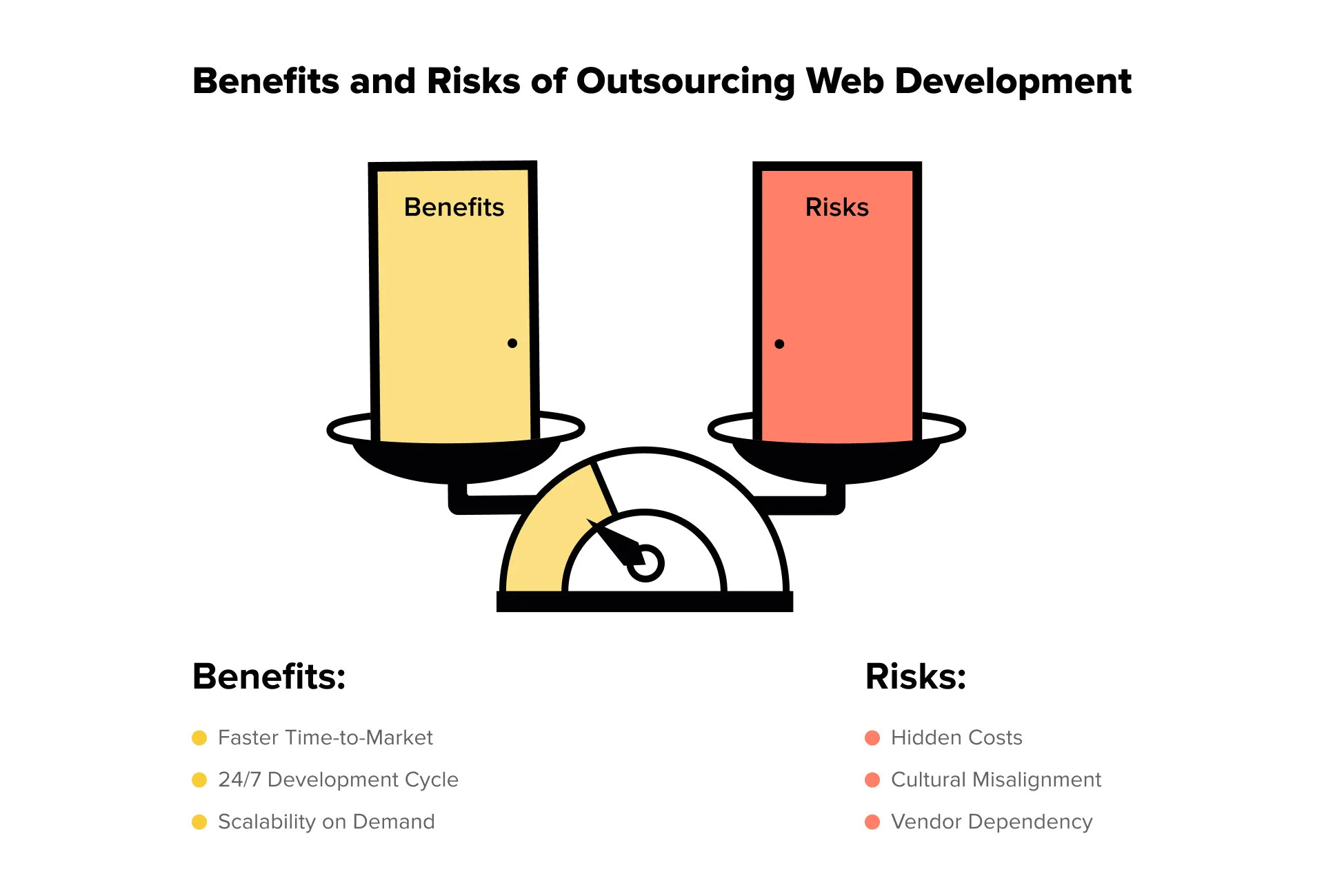
Benefits of outsourcing web development
Outsourcing your web development isn’t just about cutting expenses — it’s about building smarter. When done right, outsourcing gives you flexibility, access to global expertise, and the freedom to focus on what really drives your business. Here’s why it works so well.
- Access to Specialized Skills
The beauty of web development outsourcing lies in its reach. You’re not limited to the talent within your zip code anymore. Need an expert in microservices architecture or a UX designer who knows conversion psychology? You can find that specialist anywhere. A good outsourcing partner connects you with engineers, QA testers, and UI/UX designers who bring real-world experience from hundreds of past projects. - Cost Optimization Without Compromise
Hiring in house is recruitment, onboarding, payroll taxes, benefits, and software licenses. When you contract out app development, those costs go away. Instead, you pay just for the work that actually gets done. This approach provides transparency and control while maintaining an efficient development pace and predictable costs. Faster Development, Quicker Launch
Time is the most valuable resource in tech. With an outsourced team, your development cycle is nonstop. There's somebody halfway around the world working on your project while you're sleeping. That speed translates directly into a faster launch — and a competitive edge when timing define.- Scalable and Adaptable Teams
One of the most underrated benefits of outsourcing app development is flexibility. You can expand your app development team when things accelerate and scale down when you’re in maintenance mode. No layoffs, no lengthy hiring. Just agility — the way digital business should be. - Focus on Your Core Strengths
Time is the most valuable resource in tech. With an outsourced team, your development cycle is nonstop. There's somebody halfway around the world working on your project while you're sleeping. That speed translates directly into a faster launch — and a competitive edge when timing define - Consistent Quality and Best Practices
Top development vendors conform to standards, conduct code reviews, and utilize automated testing and continuous delivery pipelines. That equates to less bugs, quicker iterations, and a tighter product. When you work with our seasoned team, you benefit from established best practices in secure development, QA and scalability — and you don’t have to start from scratch building those systems.
Risks of Web Development Outsourcing
Let’s be real – outsourcing isn’t perfect. Like any partnership, there are potential challenges. But if you identify the risks ahead of time and plan for them, you can easily convert them into opportunities. Here’s what to watch out for.
Communication Gaps
Working in different time zones and languages can lead to a bit of confusion. To counteract this, establish routines check-ins and rely on clear communication tools like Slack, Jira, or Notion. Let your project manager know and keep a record of everything. Transparency = no surprises.
Data Security Concerns
Every time you engage with an outside team, you want to make sure that your data and intellectual property are safe. Ensure your outsourcing contract covers the NDAs, access control, and data encryption. A good team will adhere to secure development practices and be GDPR/ISO compliant.
Quality Risks and Delays
An inadequate vendor can mean undependable code or an unfinished product. To prevent this, always check the portfolio and previous cases of your potential partner. Start small — a pilot project will reveal whether their work is up to par.
Cultural or Workflow Differences
Conflicting work ethics sometimes cause tension. The best way to approach it is when you define your project milestones and delivery formats early on. That makes sure that everyone has the same idea of what “done” means.
- Dependency on an External Team
Relying too heavily on one outsourcing provider can be risky. Diversify your partnerships or make sure your documentation, source code, and access credentials always remain with you. That way, you stay in control even if your partner changes.
The truth? Most of these risks are manageable — and worth it. Our company can help you with setting up proper processes, and maintaining open communication. Due to this you can minimize risk and maximize results.
How to Outsource Web App Development: 7 Key Steps
Outsourcing doesn’t have to feel overwhelming. With the right plan, it’s actually a clear, structured, and even inspiring process.
If you follow these seven steps, you’ll know exactly how to effectively outsource your web app development, avoid common mistakes, and achieve results faster — without burning through your budget or losing control of your vision.
Step 1 - Understand Your Needs and Define Your Goals
Every good outsourcing engagement begins with clear expectations. Before you even start hiring web developers, know what your app is supposed to do, and why it matters.
What is the objective of your product, what key features does it have, what problems does it address for your users? The more well-defined the concept or an idea is, the better it is to come up with a working solution by your app developers.
Consider scalability, as well — do you require a full web solution, or a simple app for validation? This will define your technical requirements, budget, and the development schedule.
If you’re doing a marketplace MVP, just concentrate on the core features — signing up users, showing product listings, and handling payments. You can always scale later.
Step 2 - Choosing the right outsourcing model
There’s no one-size-fits-all approach. The right model depends on your goals, location, and budget. Typically, there are three ways to outsource app development:
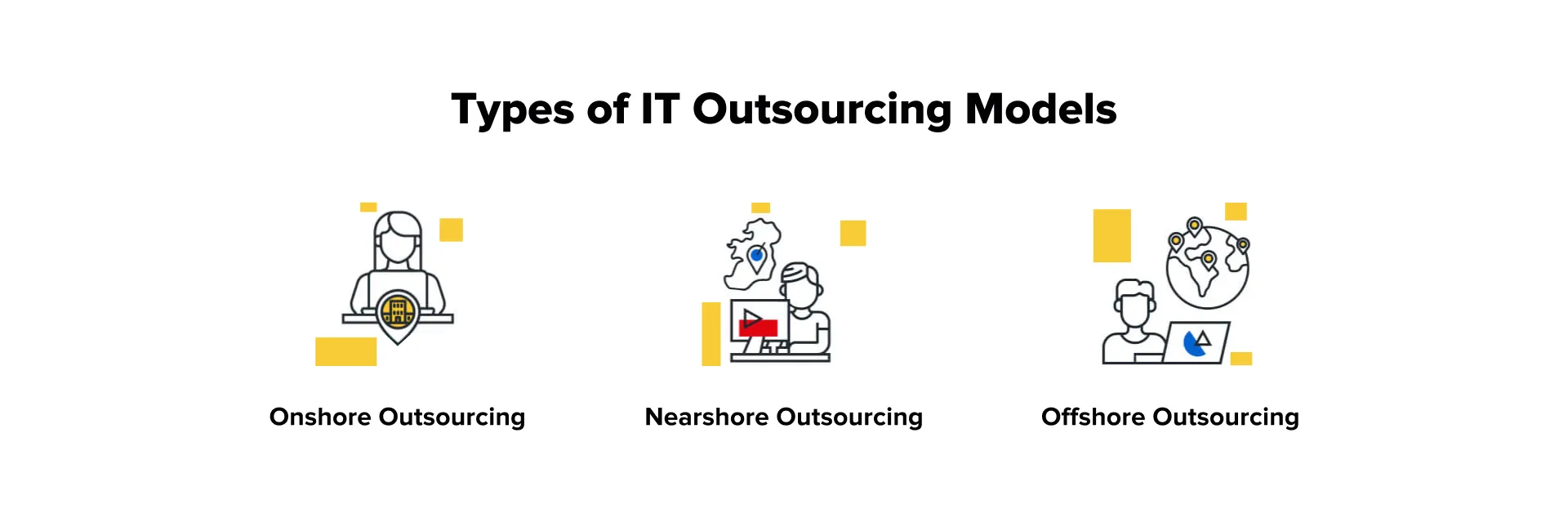
Offshore outsourcing — hiring teams from distant countries (for example, if you’re in the U.S., you might work with developers in Eastern Europe or Asia). It’s cost-efficient but may require strong communication routines because of time zone gaps.
Nearshore outsourcing — partnering with developers in nearby countries or similar time zones. It’s a good balance between cost, communication, and control.
Onshore outsourcing — collaborating with local specialists within your own country. It’s the easiest for communication, though usually the most expensive.
If you’re not sure what to choose, explore the difference between outsourcing and offshoring — understanding the trade-offs will help you find your best fit.
Step 3 - Find the Right web development partner
When you know what you need and the model, your next step is to find a team that really suits your project. Don’t simply compare price tags — consider experience in software development, reviews, and practical results.
Request to view their portfolio and case studies that are similar to your concept. See whether any of these people have prior experience with scalable web platforms, or secure development environments.
Evaluate the prospective partners for the right blend of technical expertise, communication, and transparency. For example, our company integrates all three — providing hands-on know-how, transparent communication, and a defined process from day one.
Step 4 - Evaluate Portfolios and References
Once you’ve shortlisted potential partners, it’s time to look deeper. Portfolios and client reviews will tell you more about a development outsourcing company than any sales pitch ever could.
Check the variety and scale of their previous web projects. Have they worked on products similar to yours? Do they show experience in secure development, design, and long-term support? Ask for references and, if possible, talk to past clients. Even a 10-minute chat can reveal more about work quality, communication, and transparency than dozens of documents.
Look for evidence of measurable results — not just nice interfaces. Did the project increase engagement, reduce costs, or improve scalability? That’s the real sign of a capable team.
Step 5 - Choose the Right Engagement Model
Selecting the right engagement model is one of the most critical decisions when you outsource your app development. The model you choose defines how your collaboration with the outsourcing partner will work, what level of flexibility you’ll have, and how costs will be managed. Generally, businesses use two main models — Time & Materials and Fixed Price — each suitable for different project types and goals.
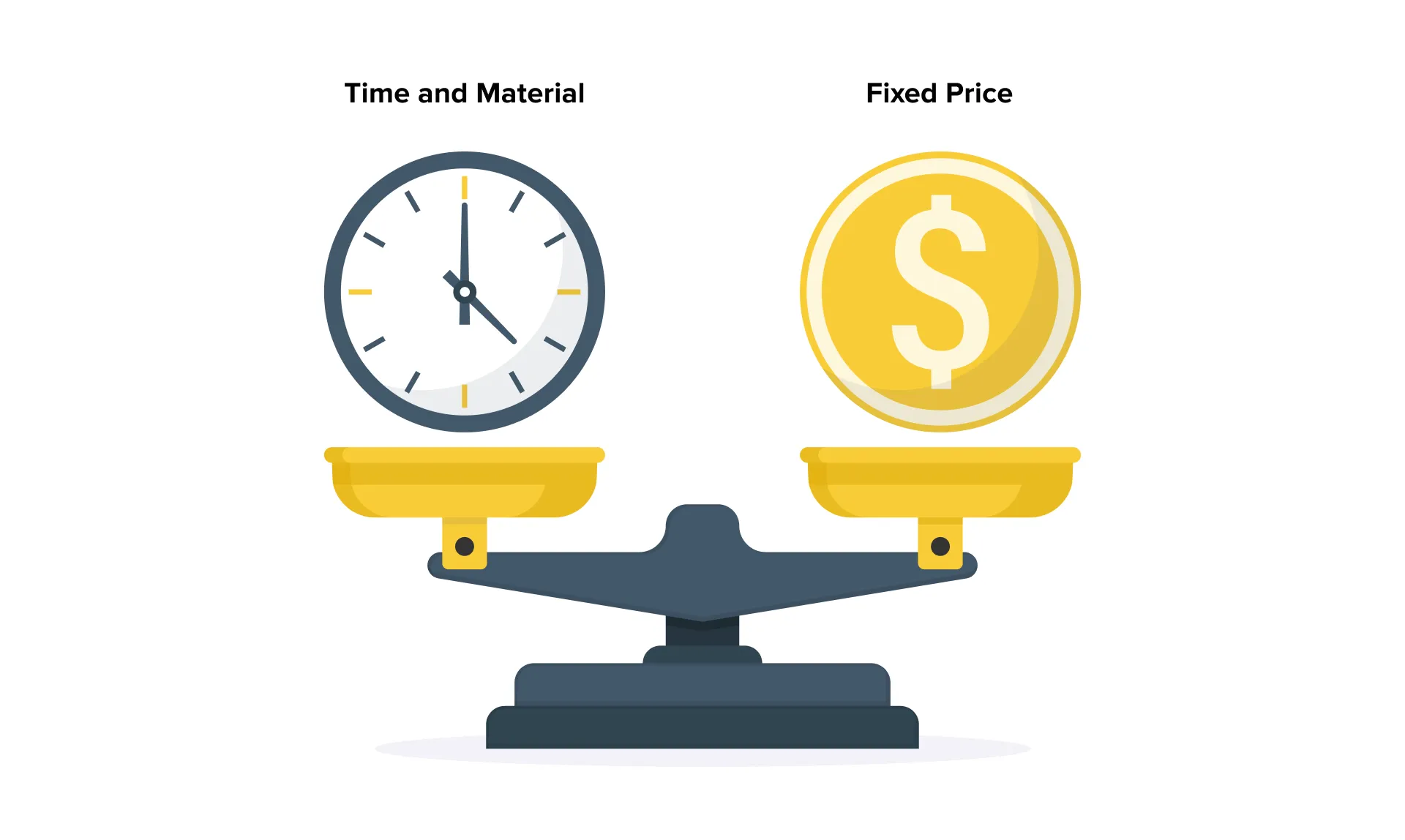
Time and Materials
The Time and Materials (T&M) model is ideal when your web app project scope is flexible or still evolving. In this model, you pay for the actual hours and resources used. For example, if your web development outsourcing partner spends 200 hours on design and 400 on coding, you pay based on that time.
This model provides greater adaptability — you can add new features, pivot strategies, or experiment with user feedback mid-project. However, this flexibility comes with the potential for higher costs if the timeline extends.
Many startups and growing companies prefer T&M because it helps them iterate quickly and align product development with real user needs.
Fixed Price
In Fixed Price model the scope of the project, the timeline and the overall cost are all established before the work starts. It’s best for when you have a solid app concept, requirements are stable and you have limited budget flexibility. For instance, in the case of building a simple app with predefined features, a fixed price will grant you that you won’t exceed the budget.
The advantage is that it’s predictable — both sides have a clear understanding of what they’re getting. But when new functions or modifications are needed during the development process, this model may be restrictive and require adjustments to the contract.
Companies tend to get leaned towards Fixed Price when they are more concerned with Cost Overruns and short turnaround time than they are Flexibility.
In this regard, we encourage you to think about complexity, objectives and risk and after that choose accordingly. Many successful outsourcing projects even use a hybrid approach — beginning with T&M for the discovery phase, and switching to Fixed Price for development once the requirements are finalized.
Step 6 - Agree on Milestones and Communication Channels
Clear communication and structured milestones are the backbone of successful outsourcing. When you decide to outsource your app development, it’s crucial to create a transparent system for collaboration that keeps everyone aligned — from the project manager to each web developer involved.
Start by setting up reliable communication tools. Platforms like Slack, Microsoft Teams, or Google Chat keep daily conversations smooth, while tools like Zoom or Meet are perfect for weekly sync calls. It’s best to establish meeting schedules and responsibilities early — for example, a 15-minute daily check-in and a detailed weekly report from the development outsourcing company. This rhythm helps maintain progress and ensures that no issue remains unnoticed.
Next, define your project milestones and deliverables. A clear roadmap with stages — such as wireframing, UI design, MVP delivery, and final testing — helps track development timelines and stay within budget. Each milestone should include measurable results and deadlines, allowing both teams to evaluate progress objectively.
Don’t forget about monitoring. Tools like Jira, Trello, or Asana make it easy to visualize each task and track performance in real time. They also simplify change management when priorities shift. DevOps platforms such as Jenkins or GitLab CI/CD can further automate progress tracking and deployment.
Finally, address challenges early. Even the most well-organized outsourcing process can face misunderstandings or delays. Keeping communication open and solution-oriented prevents conflicts from escalating. If a disagreement arises, focus on data, deadlines, and user value — not emotions.
When milestones, communication, and transparency are balanced, web development outsourcing becomes a seamless process. Teams stay motivated, timelines are predictable, and the product reaches users faster — without compromising quality or security.
Step 7 - Sign a Contract and Establish Terms
This is where things become official. A well-structured contract protects both sides and sets clear expectations.
Include key details such as project scope, delivery schedule, total cost, payment terms, intellectual-property rights, and confidentiality clauses.
Define ownership early — your company should retain full rights to the source code and all deliverables. Add a clause for penalties or revisions if the project misses milestones.
This clarity avoids frustration and ensures smooth collaboration.
Evaluating the Success of App Development Outsourcing
Once your web app development project goes live, the next critical phase begins — evaluation. Measuring success goes beyond checking if the app works; it’s about understanding how effectively the outsourcing app development process delivered value to your business.
Start by assessing product quality. Test the application under real-world conditions and observe how users interact with it. Use feedback forms, analytics, and performance metrics to spot weaknesses or UX issues. For example, high user retention and fast page load times usually indicate that your app development team met both technical and business expectations.
Next, calculate the return on investment (ROI). Compare your outsourcing expenses with the revenue, engagement, or efficiency gains the product generates. While it’s hard to predict ROI in advance, tracking indicators like customer acquisition cost, conversion rate, and lifetime value in the first months after launch provides realistic insight. Many companies discover that web development outsourcing saves up to 40% of costs compared to in-house development while delivering comparable or higher quality.
Finally, decide whether to continue outsourcing or bring development in-house. If collaboration runs smoothly and the results meet your KPIs, extending the partnership makes sense. However, if communication issues or quality concerns persist, consider switching vendors or building an internal product development team.
In the end, consistent analysis, transparency, and performance tracking ensure that your outsourcing strategy evolves — helping you refine processes and scale your digital solutions more effectively.
How Much Does Outsourcing Web App Development Cost?
Understanding the cost to outsource app development is one of the first questions every business asks. And for a good reason — pricing depends on numerous variables: project complexity, technology stack, development vendor location, and chosen outsourcing model.
Typically, outsourcing allows businesses to cut expenses while accessing skilled app developers and advanced app development services. Rates differ across regions: for example, Eastern European development agencies charge around $40–70/hour, while North American teams may cost over $120/hour.
To estimate your budget accurately, consider:
The scope and complexity of your web project;
The type of product (simple app, scalable web platform, or full web solution);
The expertise and reputation of your web development company;
Chosen collaboration model (Fixed Price or Time & Materials);
The duration of the development cycle.
Cost of Different Types of Web Apps
Different types of applications require different effort levels — and budgets. Here’s a general comparison of web development outsourcing costs depending on app complexity:
Type of Web App | Description | Approximate Cost (USD) |
Simple App | Basic functionality, static pages, minimal integrations | $10,000 – $25,000 |
Single Page Application (SPA) | Dynamic UI, basic backend, responsive design | $25,000 – $50,000 |
Complex Web App | Multi-user system, complex database, integrations with APIs | $50,000 – $120,000 |
Cross-platform Solution | Unified codebase for web and mobile | $70,000 – $150,000 |
Enterprise-Level Platform | Scalable architecture, advanced analytics, high security | $120,000 – $250,000+ |
Hidden Costs of Outsourcing App Development
Even when you plan carefully, some expenses often remain unseen. Common hidden costs include:
Communication and management overhead — coordinating across time zones requires more project management hours.
Specification changes — adjusting requirements mid-project increases development time and testing workload.
Post-launch support — bug fixes, updates, and server maintenance can add 10–20% to the total cost annually.
Data security & compliance — ensuring secure development and GDPR/ISO compliance may require additional audits.
Being aware of these elements early helps you plan a more realistic budget. When managed properly, outsourcing allows companies to maintain lower cost structures without sacrificing quality or scalability.
Conclusion
Outsourcing software development can be a game-changer for businesses, but only when you partner with the right team. While working with small, unknown developers may carry risks, top industry experts deliver solutions that are reliable, scalable, and tailored to your needs. They offer fast development, ongoing support, and flexible collaboration, all while keeping costs manageable.
The outsourcing market is booming, and more companies are embracing remote development to stay competitive. By trusting your project to experienced teams like Lampa Software, you get high-quality digital products designed to meet your business goals, delight your users, and accelerate growth. Remote collaboration isn’t just convenient—it’s a strategic advantage.