
Preparing an RFP for software development may take many weeks; however, the hardest task may start after the submission period ends. Once proposals arrive, a business must turn different technical approaches, prices, assumptions, and teams into one defensible decision.
The problem is rarely a lack of options. It is the lack of a consistent way to compare them. A practical evaluation process helps buyers assess each software development RFP independently, identify hidden differences in scope, and select a supplier based on evidence rather than the loudest opinion in the room.
Why a Structured Evaluation Process Matters
Without a structured process, proposal comparison quickly becomes subjective. One vendor may treat data migration as a standard part of the process, while another treats it as a value-added service. Directly comparing the two prices is thus meaningless.
Group discussion can create another problem. If the decision panel discusses proposals before independent scoring, anchoring bias may influence everyone else's judgment.
A documented scoring framework also creates an audit trail. This matters when stakeholders later ask why a particular software vendor was selected.
The evaluation stage is not simply the final step after writing the RFP. It is where many vendor selection mistakes actually happen.
A structured procurement process helps the evaluation committee:
Compare proposals against the same evaluation criteria.
Separate genuine value for money from the cheapest bid.
Record the reasoning behind the final decision.
Build a defensible decision if the selection is questioned later.
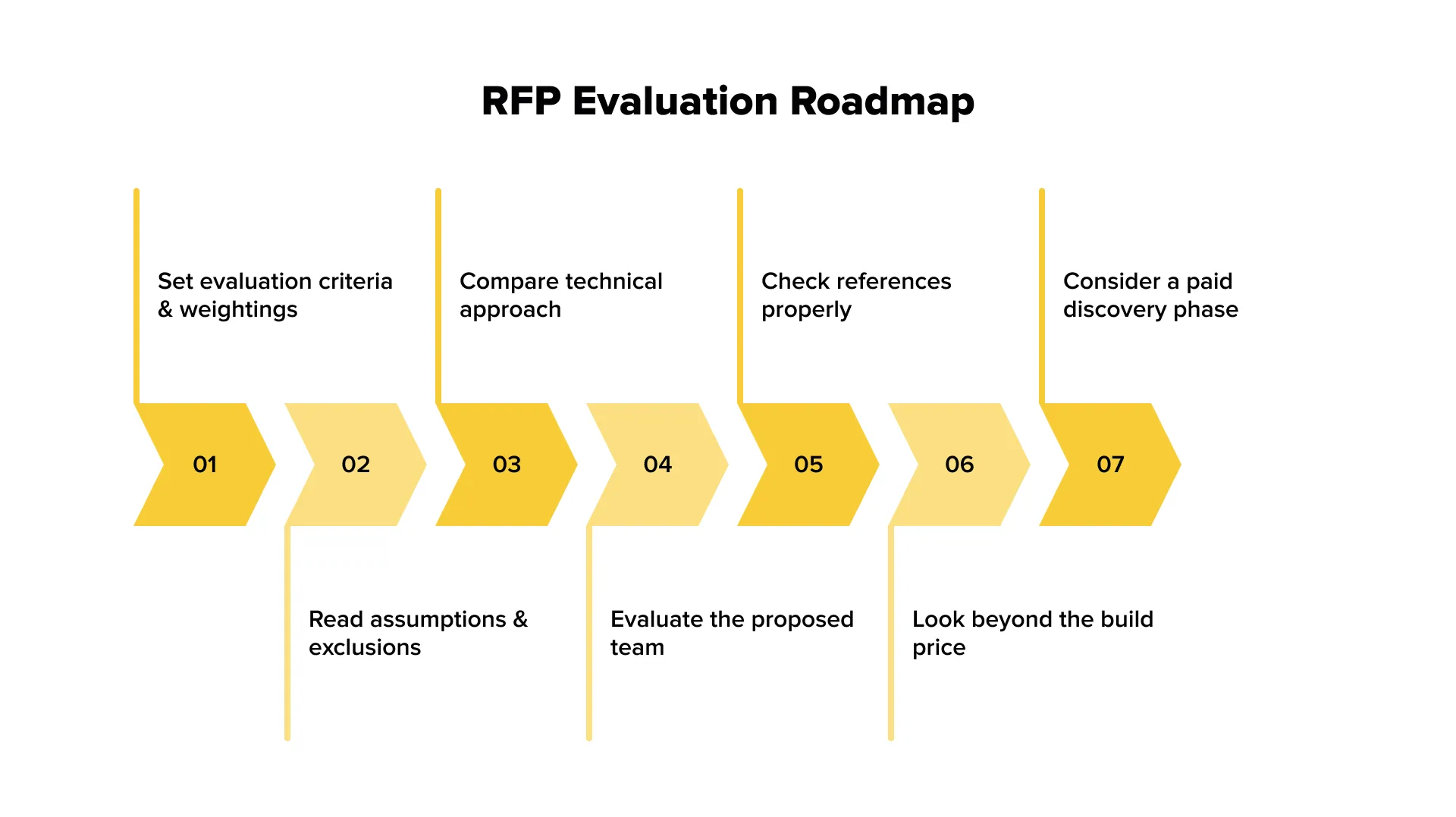
Set Your Evaluation Criteria and Weightings First
Before reviewing responses to RFP template for software development, establish the criteria and weighted criteria that will be used to score every bidder.
A useful starting point is:
30% — approach and understanding;
25% — relevant experience;
20% — proposed team;
15% — commercials;
10% — ongoing support.
The exact split should reflect the project. A complex application development RFP may place greater weight on technical expertise, while a straightforward replacement project may prioritize project timeline or cost.
Each member of the evaluation committee should score independently before any group discussion. The decision panel can then meet, compare results, reconcile major differences, and record why scores changed.
Publishing the software vendor selection criteria in the request for proposal also benefits buyers. Suppliers know what matters and can structure their response accordingly. A software RFP template that clearly explains scoring expectations usually produces more relevant proposals.
Read the Assumptions and Exclusions First
When learning how to evaluate software development proposals, start with the assumptions and exclusions rather than the price on page one.
Look for statements such as:
“Assumes the client provides all content.”
“Data migration is excluded.”
“Third-party license fees are not included.”
“Security testing is subject to additional scope.”
These details define the actual scope of work. Two bids separated by £70,000 may both be reasonable if they are pricing different responsibilities.
For example, one supplier may include legacy data migration, acceptance testing, and training. Another may exclude all three. The second proposal will naturally show a lower fixed price, but it does not represent the same project.
Flag every exclusion that you assumed would be included. Only after this review should you compare commercials. This simple step is essential when you need to evaluate software development RFP responses fairly.
Compare Technical Approach, Not Just the Price Tag
Price matters, but the technical approach shows whether a supplier understands the problem.
Check whether the proposed architecture matches the scale, integrations, compliance requirements, and data security needs described in the RFP. A technology list alone is not enough. A strong proposal explains why a particular stack was chosen and what trade-offs it entails.
Also look for evidence of risk assessment. Did the supplier address difficult integrations and edge cases, or repeat the requirements back?
The proposed project time frame should be analyzed equally critically. An unrealistic deadline may signal a vendor's effort to win the contract through excessive optimism rather than a realistic plan.
This is especially relevant for custom software development, where technical decisions made during development can have a significant impact.
Evaluate the Team You'll Actually Get
A development agency may have an impressive portfolio, but the named team composition matters more than the company profile.
Don't meet only with the salesperson who made the presentation; talk to the technical lead as well to see whether the team knows what it is doing.
A clear red flag is having the senior team present during the sale and then appointing a junior team afterward. Confirm continuity before finalizing vendor selection.
Вставити картинку
Check References and Past Work Properly
Reference checking should be part of due diligence, not an extra measure.
Talk to a minimum of two past clients whose projects have similarities with yours in terms of scale or industry. Don't limit yourself to asking whether the client was "satisfied.”
Ask specific questions:
What changed after the contract was signed?
How did the supplier handle disagreements?
Were change requests managed transparently?
Did the team meet the agreed acceptance criteria?
What would the client do differently next time?
Case studies and a portfolio are useful, but they should support reference checks rather than replace them. Look for comparable complexity, not simply similar industries.
If a software vendor is reluctant to provide references for relevant work, treat that hesitation as information in itself.
Look Beyond the Build Price
The headline price rarely represents the total cost of ownership.
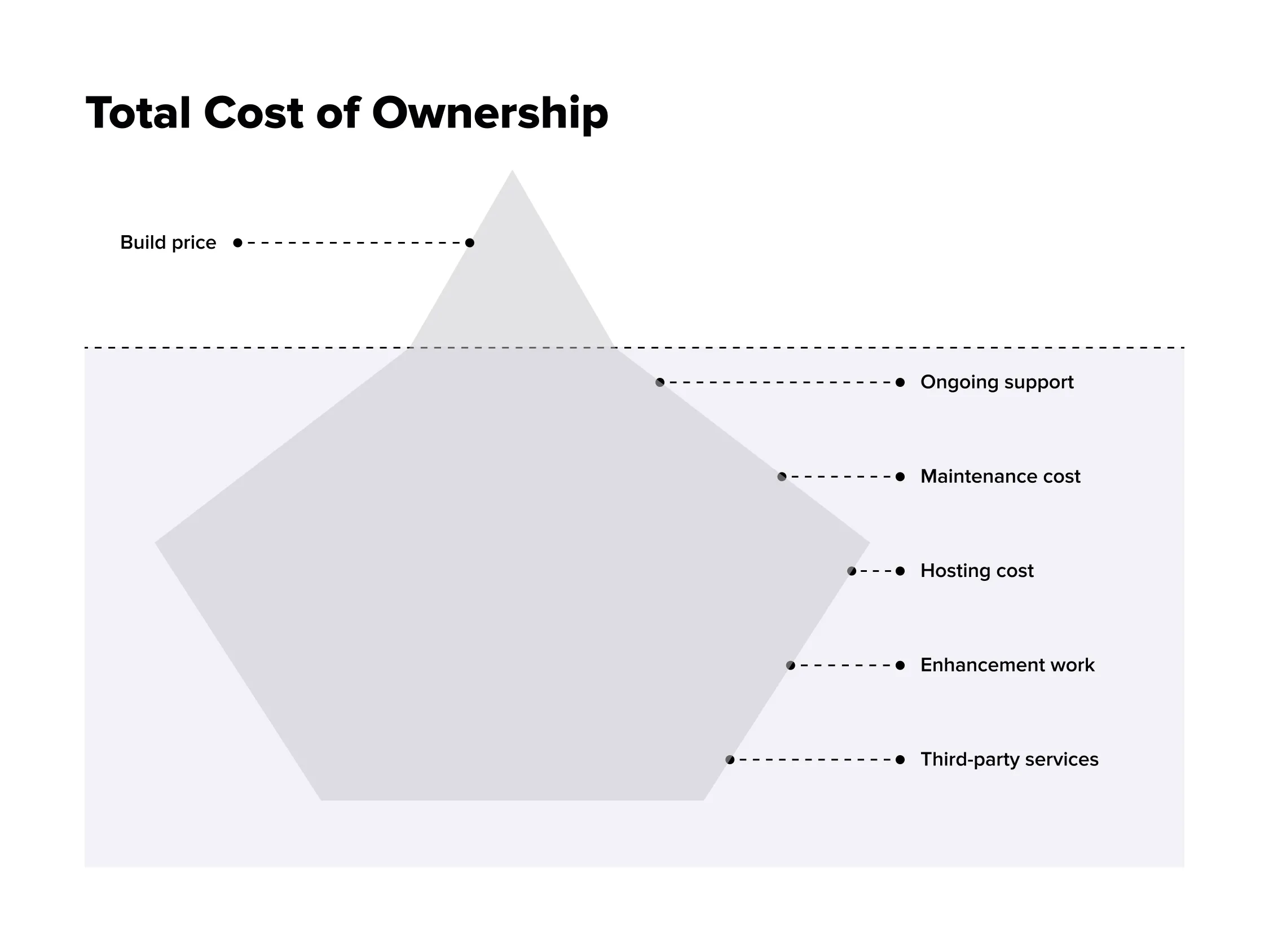
Ask every bidder to separate the initial build from:
ongoing support;
maintenance cost;
hosting cost;
enhancement work;
third-party services.
A low fixed price can become expensive if the contract creates vendor lock-in or charges heavily for future changes. A time-and-materials approach may also be justified, but only when the rates, assumptions, and controls are clear.
Check who owns the code and whether your business can move to another supplier later. Long-term software procurement should consider the full life of the system, not just the initial implementation. This is particularly relevant when an IT outsourcing services arrangement is expected to continue beyond the original development project, because ownership, support responsibilities, and supplier dependency can affect the long-term cost.
Consider a Paid Discovery Phase Before Full Commitment
For a substantial software development request for proposal, a paid discovery phase can reduce risk between vendor selection and the full build.
A short discovery engagement allows the preferred supplier to test assumptions, refine requirements, and produce a firmer estimate. It also gives both sides an opportunity to evaluate the working relationship. For buyers with complex requirements, business analysis and discovery can help turn an initial idea into a clearer scope before development begins.
The output may include a refined scope, risk assessment, technical recommendations, and clearer milestones.
If the relationship is not working, the buyer has a clean and relatively low-cost exit. That is safer than committing to months of delivery based entirely on a proposal and pitch.
Common Mistakes When Evaluating Software Development Proposals
Several mistakes repeatedly weaken an otherwise sound RFP process.
Treating the Lowest Price as the Best Value
The lowest price may reflect efficiency, but it may also reflect missing scope. Value for money depends on what is actually being delivered.
Discussing Responses Before Independent Scoring
Early discussion can create anchoring bias. Score independently first, then compare opinions.
Skipping Reference Checks
A strong portfolio does not show how a supplier behaves when a project changes or encounters problems.
Ignoring Assumptions and Exclusions
Comparing prices without comparing scope creates a false proposal comparison.
Using Unweighted Criteria
Without a published scoring framework, personal preferences can dominate the decision and weaken the audit trail.
Going Silent After the Deadline
Acknowledge receipt, communicate the next steps, and maintain the promised decision date. Suppliers invest significant effort in responding to request for proposal software development.
These red flags are not reasons to reject a bidder automatically. They are signals that require further questions before making a final choice.
A Simple Scoring Framework You Can Use
The following framework provides a practical starting point for evaluating RFP responses.
Criteria | Weight | What to Look For |
Approach & understanding | 30% | Do they restate the problem accurately, not just the features |
Relevant experience | 25% | Comparable projects in size, sector, and complexity |
Proposed team | 20% | Named individuals, allocation, and continuity through delivery |
Commercials | 15% | Total cost of ownership, not just the build price |
Ongoing support | 10% | Clarity on post-launch maintenance, hosting, and enhancement |
This is not a fixed rule. Adjust the weighted criteria according to the specific project.
For example, a regulated platform may increase the importance of compliance requirements and data security. A project with a fixed deadline may give more weight to delivery capacity and realistic milestones.
The key is to define the framework before reviewing the first response.
How Lampa Approaches RFP Responses
Lampa usually sees the process from the supplier's side, responding to RFPs and explaining how a proposed solution will work. That perspective makes it clear what separates a strong response from a polished document with little substance.
A useful proposal should clearly restate the business problem, present an honest technical approach with explained trade-offs, name an available team, and provide transparent commercials that separate the build from ongoing support.
Lampa has been delivering custom software and IT outsourcing services for more than ten years, across web, mobile, Smart TV, and AI-driven products, for clients ranging from early-stage startups to established enterprises in fintech, healthcare, retail, and pet tech. Recent projects include a connected-vehicle traffic management platform, an all-in-one pet care app, and Smart TV apps built for Roku, Samsung, and LG — the kind of range that shows up in a proposal as realistic timelines and named specialists rather than generic promises.
Lampa can also support buyers before and after supplier selection. The team can help clarify requirements before a tender goes out and support delivery once the right approach has been selected.
If you need a second technical opinion on a shortlist or want a team to respond to your own RFP, you can get in touch with our team for a focused